Photo by Anamul Rezwan: https://www.pexels.com/photo/people-stands-near-green-metal-industrial-machine-1087083/
The global labor markets are changing due to automation, which is experiencing a major shift in how we work. Look at a world where AI and robotics handle repetitive tasks, allowing people to focus on strategic and creative responsibilities. While we expect this move to boost productivity and efficiency, it also raises concerns about inequality and job displacement. How can we overcome these challenges and make the most of automation’s promise for a better future?
The historical context of automation
Photo by Tiger Lily: https://www.pexels.com/photo/men-working-in-a-warehouse-4481258/
The Range of Modern Automation
There are many different technologies and applications used in modern automation. Machines may now carry out tasks that were previously limited to people thanks to robotics, artificial intelligence, and machine learning. The manufacturing process is made more precise and efficient by automated assembly lines and robotic arms. Business-client interactions are being changed by AI-powered chatbots and automated customer service solutions.
It is particularly important when artificial intelligence is used in data analysis and decision-making processes. Massive amounts of data are looked at by AI systems at previously unheard-of rates, and the patterns and insights they uncover drive innovation and strategic planning. In the finance industry, artificial intelligence (AI) is used for fraud detection, algorithmic trading, and predictive analytics, which is changing the industry and its responsibilities.
Photo by Kindel Media: https://www.pexels.com/photo/full-shot-of-robot-toy-8566474/
Automation in Manufacturing
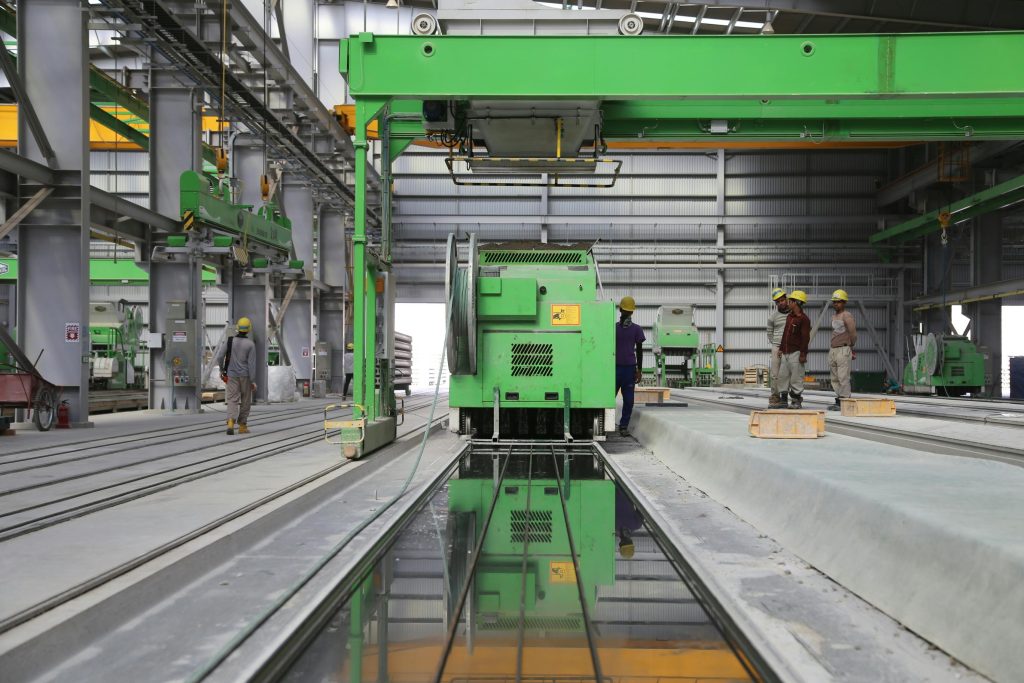
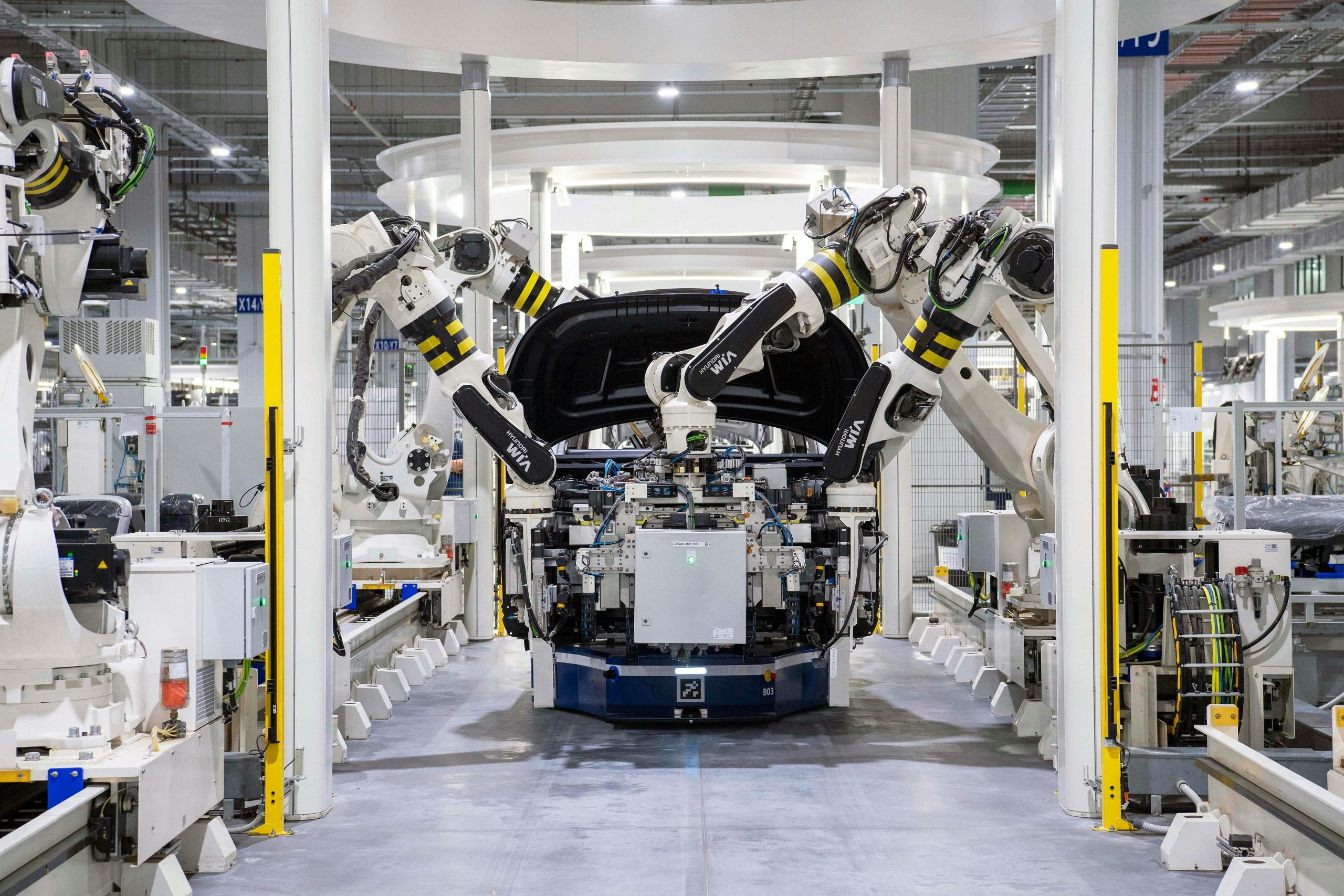
Manufacturing has always been at the forefront of automation, which has major effects on labour markets. Robotics and automated machinery have changed manufacturing processes, lowering costs and increasing productivity while also replacing many manual and repetitive jobs. The auto industry is an excellent instance of this shift, with assembly lines—which were formerly manned by human workers—being controlled by robotic arms that execute tasks with rarely seen precision and speed. This shift has resulted in the creation of new jobs in robot programming and maintenance while also avoiding traditional industrial jobs.
Automation’s power is demonstrated by advanced manufacturing technologies like Internet of Things (IoT) and 3D printing. Traditional manufacturing requires more effort, while 3D printing allows for the quick design and manufacture of complex objects. By allowing real-time production monitoring and optimization, IoT connects machines and systems, boosting efficiency. However, it lessens the need for human intervention as well.
Automation in Services
The service sector, which includes industries like banking, healthcare, and retail, is likewise greatly affected by automation. By doing away with the need for cashiers and stock clerks, self-checkout kiosks and automated inventory management systems improve retail operations.
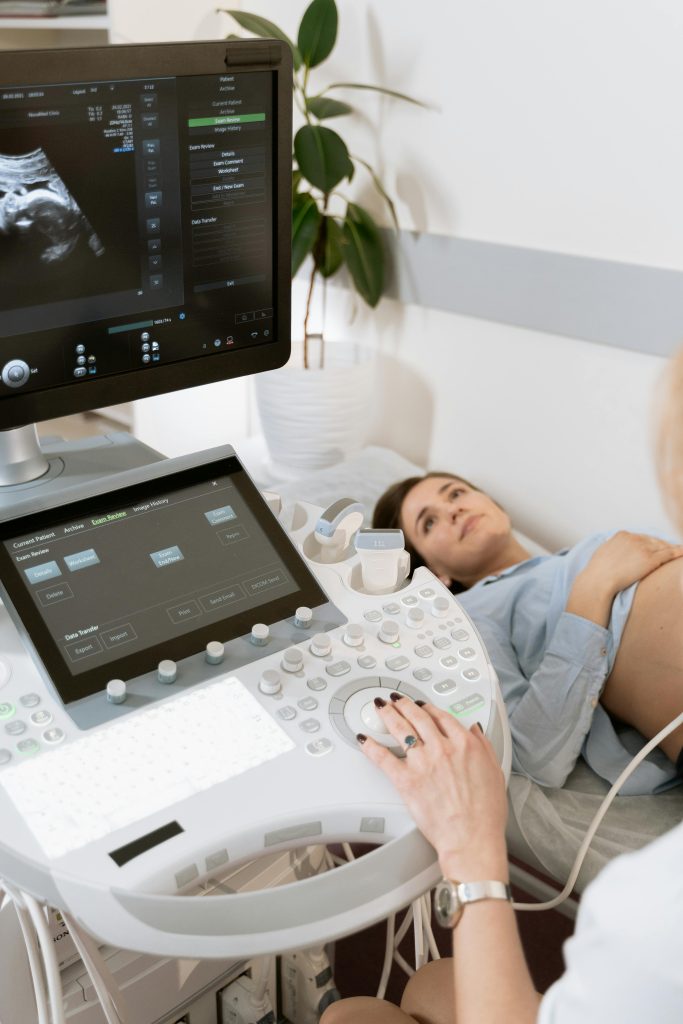
The healthcare sector is also greatly impacted by automation. AI-driven diagnostic systems correctly assess medical data and pictures, assisting physicians in the identification and management of illnesses. In order to increase accuracy and reduce recovery periods for patients, robots are used during surgeries. The outcomes of healthcare are improved by these advancements, but they also call for the learning of new skills and the capacity to adapt to changing roles.
Everything in banking has changed as a result of automation, including complex trading processes and customer support. While complicated algorithms do high-frequency trading and make snap judgments based on huge datasets, chatbots driven by AI handle regular customer inquiries. As a result of these developments, the demand for data scientists and AI specialists is rising in the financial industry, while traditional positions are becoming less relevant.
Photo by MART PRODUCTION: https://www.pexels.com/photo/photo-of-ob-gyn-doing-a-test-7088841/
Automation and the gig economy
Automation interacts with the gig economy, which is characterized by freelance work and short-term contracts, in a number of complex ways. Automated job matching is used by platforms such as TaskRabbit, Uber, and Lyft. Still, the gig economy shows how unstable employment is in an automated environment.
While automation increases productivity and provides more flexible work arrangements in the gig economy, it also results in job insecurity and lower worker benefits. The income of gig workers may be unstable, and they might not have full access to benefits like health insurance and retirement programs. The future of employment and the need for regulation to protect gig workers in a less manual economy are major concerns raised by this development.
Economic implications of automation
The distribution of income, economic growth, and productivity are all greatly affected by automation. Positively, automation boosts economic growth, creates new industries, and generates wealth by allowing businesses to produce more with less.
The benefits of automation are not shared equally, though. The demand for low-skilled labor falls as machines take over routine tasks, which causes job losses and pay stagnation in some labor markets. On the other hand, highly skilled workers who design, oversee, and maintain automated systems are in greater demand and are paid more. There’s a chance that this polarization will make social tensions and wealth imbalance worse.
The future of work
The nature of labor is certain to change; jobs related to routine and repetitive tasks are most at risk of automation, while positions involving creativity, critical thinking, and human connection are less likely to be replaced by robots. As a result, in order to survive in an automated economy, the future worker must adjust and acquire new skills and abilities. The future of labor in an automated society is a topic of much debate and guessing. Some analysts predict that automation will result in a net loss of jobs as robots replace humans in a variety of sectors.
Education and Skill Training
In order to prepare workers for a world that is becoming more automatic, education and skill training are essential. Traditional education systems, which often point out memorizing and repetition, may not be enough. Instead, there is a growing demand for education that promotes critical thinking, problem solving, and flexibility. Lifelong learning will become even more important as workers must constantly update their skills to stay up-to-date with recent advances in technology. Businesses, governments, and educational institutions must collaborate to provide affordable, easily accessible training programs that help people transition to new roles in an automated economy.
Ethical and Social Issues
There are plenty of social and moral problems raised by the growth of automation. There are worries about loss of jobs and rising unemployment as machines take on more tasks. To solve these problems, policymakers and business leaders need to come up with plans for a seamless shift for the impacted staff.
Adopting legislation that provides social safety nets, training programs, and unemployment insurance to those who have been affected by technology is one way to help. The moral implications of automation and AI, including problems with privacy, security, and bias, must also be addressed. Making sure automated systems are open, equal, and accountable is necessary to win over the public’s trust and acceptance.
Global Perspectives on Automation
Depending on factors including government policy, sector structure, and economic development, the effects of automation on labor markets change depending on the region and nation. In developed countries, automation changes high-tech industries and boosts production, but it also offers problems for those with low skill levels.
In developing countries, automation brings both advantages and disadvantages. On the one hand, automation helps developing countries catch up to more industrialized nations by boosting economic growth and productivity. In contrast, rapid automation adoption carries the risk of challenging established companies and creating a large-scale loss of jobs, particularly in labor-intensive industries.
Case Studies of Automation in Various Countries
Analyzing case studies from different nations helps shed light on various implications of automation. For instance, the automotive sector in Germany is leading the way in the adoption of robotics and automation, which boosts competitiveness and productivity but calls for skilled workers to oversee and maintain new technology.
In contrast, nations like China and India have new challenges and opportunities. Automation is changing industries in India, including manufacturing and IT, but the nation still has difficulties in creating enough jobs to support its expanding population. Although China’s strong drive toward automation, especially in the industrial sector, aims to move the nation up the value chain, it also creates questions about loss of jobs and the future of the labor market.
Policy responses to automation
In order to support the shift to an automated economy, governments are essential. While ensuring that the benefits of automation are split up fairly, effective policy responses can help reduce some of its negative effects. Possible steps for policy include:
Investing in Education and Training: granting workers access to programs for education and skill development that will help them become ready for their future employment.
Supporting Displaced Workers: supplying workers affected by automation with job training, unemployment benefits, and other forms of support.
Boosting Inclusive Growth: establishing laws to guarantee that society as a whole shares in the advantages of automation, thereby reducing inequality in earnings and strengthening unity among people.
Encouraging Innovation: establishing conditions that encourage creativity and the development of new sectors of the economy, which opens up new job opportunities.
Regulating AI and automation: To ensure that AI and automation are used morally and openly, this calls for the creation of moral guidelines and norms.
Photo by fauxels: https://www.pexels.com/photo/high-angle-shot-of-group-of-professionals-3183172/
Business Strategies for navigating automation
The landscape of business has shifted due to automation, and this requires adaptability. This means coming up with new strategies for taking advantage of automation to obtain an advantage over the competition, investing in new technology, and changing how things work within companies. Important factors for business include:
Reskilling and upskilling employees: This means making training program investments to help staff members pick up new skills and adjust to shifting roles.
Embracing innovation means always looking into and using new technologies to boost productivity and drive expansion.
Fostering an Adaptable Culture: creating an environment at work that values the ability to adapt, ongoing education, and creativity.
Stakeholder collaboration: To address the promise and difficulties of automation, collaboration with governmental bodies, academic institutions, and other interested parties is required.
Ensuring Ethical Technology Use: Ensuring the ethical and transparent use of automation and artificial intelligence through the establishment of ethical standards and policies.
The human element in an automated world:
In many areas of the workplace, the human element remains important, even with major improvements in technology. It is less common for jobs requiring sensitive problem-solving and creativity to be fully automated. Moreover, human judgment and decision-making play an important part in automated system management and supervision.
Human roles in the workplace have an opportunity to be changed as automation changes labor markets. People can undertake more fulfilling and meaningful work that makes use of uniquely human qualities instead of concentrating on regular and unimportant duties. This change calls for business and social change that prioritizes creativity, teamwork, and lifelong learning.
Conclusion
Around the world, automation is changing the nature of work and presenting both opportunities and challenges. It increases economic growth and productivity but also creates questions about job loss, income inequality, and the need for new skills. Governments, corporations, and educational institutions must collaborate to ensure that everyone gains from automation.
Going forward, it’s important to strike a balance between fairness, morality, and technical advancement. With automation, we can use innovation and fairness to build an open and lifelong learning workplace for the future.
Automation has gone a long way since the days of basic mechanical machines. Today, it drives industry advancements and everyday conveniences. But what does the future promise for a world increasingly powered by machines?
Automation, the use of technology to complete activities without human interaction, is changing the world. From the Industrial Revolution to artificial intelligence, machines have gradually taken over tasks previously held by humans. This surge symbolizes not only technology progress, but also a significant transformation in how we live and work.
Historical Perspective
Early Automation
Imagine life without dishwashers! Early automation is similar to the earlier inventions that saved time. We’re not talking about robots here, but rather intelligent technologies that have accelerated the process. Consider windmills grinding grain or looms weaving cloth as early steps toward allowing machines to handle the labor. This was not about replacing people, but about making them more productive. It’s like the first dishwasher, which saved you from scrubbing pots – a helping hand that altered the way we worked!
The Industrial Revolution
Consider transitioning from a peaceful cottage industry to a hectic factory floor. The Industrial Revolution represented a significant advancement in automation. Steam engines burst to life, powering massive machines that produced textiles and other items. It wasn’t Grandma knitting yarn by the fire anymore! Production increased dramatically, as did societal changes. Cities grew as people went to factories seeking work. It wasn’t always rosy, but the Industrial Revolution was a watershed moment when machines became a key factor in reshaping how we worked and lived.
Photo by Chevanon Photography: https://www.pexels.com/photo/woman-wears-yellow-hard-hat-holding-vehicle-part-1108101/
20th Century Advancements
Consider transitioning from a hand-cranked assembly line to a choreographed robot dance. The twentieth century saw a massive increase in automation. Consider Henry Ford’s automobile assembly line: parts zipped by on conveyor belts, with each worker acting as a small cog in the machine. Then came programmable machinery and computers, which improved automation. Robots became more than clunky sci-fi fantasies; they became factory workers. This wasn’t just about producing things faster, but also more precisely and efficiently. Automation evolved from a simple aid to a game changer in production during the twentieth century.
The modern landscape
Manufacturing
Consider a factory floor packed with devoted workers who construct vehicles with superhuman precision. That’s how automation has altered production! Robots now do repetitive operations such as welding, painting, and assembling in an efficient and uniform manner. This frees up human workers for activities that necessitate innovation, problem solving, and supervision. Consider it a super-powered team: robots do the heavy lifting and precise motions, while humans focus on design, quality control, and ensuring everything goes smoothly. Manufacturing automation is not about replacing humans; rather, it is about forming a strong relationship for maximum efficiency and quality!
Service Industry
Consider a world in which your fast-food order is handled by a friendly kiosk rather than a cashier. That’s the service sector with a hint of automation! Robots are no longer used only to weld autos. Automation takes various forms in the service industry, including smart chatbots that answer customer queries, self-checkout lines at grocery stores, and even robotic waiters who deliver food in restaurants. While some tasks are mechanized, this does not imply that robots are replacing all service people. Instead, automation serves as a helpful assistant, freeing up employees to focus on more difficult client interactions or duties that require human intervention, such as addressing complex problems or delivering personalized service. It’s all about providing a smoother, more efficient experience for both clients and service personnel!
Daily Life
Imagine waking up to a house that adjusts the temperature to your preference before you get out of bed. That is automation infiltrating daily life! These days, smart devices can be found almost anywhere, from thermostats and robotic vacuums to voice assistants that control lighting and play music. These automatic assistants streamline our routines, giving us back valuable time. Consider it a network of untiring assistants: the robot vacuums while you cook breakfast, and the smart speaker plays your favorite news update. Automation in daily life is not about getting lazy; rather, it is about liberating us from routine duties so that we may focus on what is most important, such as spending time with loved ones or pursuing interests.
Photo by Sharad Kachhi : https://www.pexels.com/photo/black-flat-screen-computer-monitor-on-black-wooden-table-3937174/
Economic Effects
Job Displacement and Creation
Consider a game of musical chairs in which robots join the circle. The rise of automation brings with it both employment displacement and job creation. As machines take over repetitious work, some employment may be reduced or eliminated completely. It’s as if certain seats have been eliminated from the game. But don’t worry, new seats are also on the way! Automation also opens up new chances in industries like data analysis, robotics engineering, and AI research. These are the tasks required to develop, build, and maintain the automated systems. Consider the game to be changing, with new talents required to obtain those new chairs. The trick is to be prepared for this transformation. We can ensure that everyone has a place at the table by providing workers with the skills required for the professions of the future in the autonomous future!
Productiveness and Efficiency
Imagine a sculptor patiently crafting a masterpiece with a chisel and hammer. Consider them holding a cutting-edge laser cutter; that is the productivity boost that automation provides. Repetitive operations like data input, assembly lines, and even some procedures are being undertaken by machines with superhuman speed and accuracy. This allows human workers to concentrate on the precise details, the creative spark, or the personal touch that technology cannot duplicate. Consider the sculptor employing a laser cutter for rough shaping before switching to their skillful hands for the finishing touches and creative flourishes. However, automation is more than simply about speed. It also reduces mistakes and waste materials. Consider that the laser cuts properly every time, avoiding the possibility of the sculptor accidently chipping the stone. This translates as increased productivity in areas ranging from manufacturing to healthcare, allowing humans to concentrate on higher-level jobs while maintaining consistent, high-quality results. It’s beneficial for both efficiency and human expertise!
Economic Growth
Consider a bakery that used to bake bread by hand but now boasts a massive, automated oven that produces loaves 10 times faster. That is the prospective effect of automation on economic growth. Businesses may create more goods and services with fewer resources if they increase productivity and efficiency. This results in decreased expenses and potentially cheaper items for customers. More efficient businesses are more competitive, causing a ripple effect that boosts the entire economy. It’s as if the excess bread is being sold not only locally, but also to new markets, creating jobs in delivery and sales. However, it is critical to recognize that automation is not a panacea. It can create economic progress must be ensured to benefit everyone, not just a chosen few. By investing in education and training programs, we can provide workers with the skills they need to prosper in the automated economy, ensuring that everyone receives a piece of the economic pie!
Social Impacts
Quality of Life
Consider switching from an afternoon of laundry to an hour with a pleasant robot. This is how automation may affect quality of life. Automation saves us valuable time by taking over monotonous duties such as cleaning our houses and mowing our lawns. Consider all the extra hours you could spend with your family, pursuing hobbies, or finally learning that new language you’ve always wanted to try! Automation can also help to improve safety in dangerous jobs. Consider using robots instead of people to handle hazardous chemicals or diffuse bombs. This not only saves lives, but also allows human workers to concentrate on planning and problem solving, so reducing risks. However, it is critical to analyze how automation affects different elements of life. While it can save you time, We must ensure that it is used efficiently while avoiding social isolation. Furthermore, automation does not help everyone in the same way. The goal is to ensure appropriate execution that takes into account both social and economic concerns, as well as ease. We can create a world in which everyone has more time and chances to live fulfilled lives by carefully utilizing automation!
Access to Services
Consider living in a distant village, many miles away from the nearest doctor. Consider the appearance of a pleasant robot clinic, complete with automatic diagnostic instruments. This is the possibility of automation for service access! Automation can help in locations with limited resources. Consider self-service kiosks providing basic medical consultations or educational programs offered by AI instructors. These automated services cannot completely replace human doctors and teachers, but they can provide critical support and broaden access to care and information in areas where it was previously unavailable. Challenges do exist, however. Not everyone has equal access to technology, and depending primarily on automation may exclude some groups. The goal is to ensure that these discrepancies are considered during implementation. Combining technology with human skill allows us to envision a future in which everyone, regardless of location, has access to critical services!
Privacy and Security issues
Consider your entire life story saved on a gigantic bookshelf, accessible with a single swipe. Consider who has that access card! That’s the catch-22 of automation and data collection. As technologies grow more intertwined into our lives, they collect enormous amounts of personal information. Consider smart assistants that remember your preferences or healthcare AI that tailors treatment strategies. However, there is another side to this. Data breaches can reveal sensitive information, and biased algorithms might result in unjust choices, such as loan denials or discriminatory hiring. It’s as if the bookshelf is vulnerable to prying eyes or is stocked with obsolete, discriminatory labels. We require robust security measures to protect our privacy and enable fair and unbiased AI development. Consider establishing that safe data is stored in a vault, and the labels on those books are constantly reviewed. By addressing privacy and security concerns, we can use automation to its full potential while avoiding its dangers.
Technological Drivers
Artificial intelligence (AI)
Consider having a super-smart study partner who absorbs everything you read and can answer any question you throw their way. That’s similar to Artificial Intelligence (AI). AI, rather than a human brain, mimics intelligent behavior through complex algorithms and massive amounts of data. Consider feeding your study buddy mountains of textbooks and articles – the more material they have, the better they will grasp and react to your questions. AI is already changing numerous industries, including healthcare (diagnosing ailments) and entertainment (recommending movies you’ll enjoy). However, AI is still in development, and there are several issues to consider. AI, like any study partner, is capable of making mistakes if its learning resources are biased or inadequate. The key is to develop artificial intelligence responsibly, assuring It is fair, neutral, and used for good! We can create a future full of new opportunities and revolutionary improvements by leveraging the power of AI.
Robotics
Consider developing a relentless partner capable of tackling any task. Robotics is the equivalent of bringing those helpers to life! They’re no longer merely clunky science fiction constructs. Robots exist in a variety of shapes and sizes, ranging from tiny medical robots to giant industrial arms that assemble cars. Consider them to have a toolbox of abilities: some robots excel at strength and precision in factories, while others may be masters at traversing delicate surroundings or even offering companionship. Robotics is transforming numerous fields, but it’s crucial to remember that these machines are just tools. They, like any teammate, require clear instructions and human guidance. The goal is to make the most of their capabilities while maintaining human control and ethical issues. Working with robots, we can see a future in which humans and machines collaborate to achieve extraordinary feats!
Photo by WENCHENG JIANG: https://www.pexels.com/photo/large-robot-and-a-built-structure-8188563/
The Internet of Things (IoT)
Consider your house as a self-aware friend who works silently behind the scenes to make your life easier. That’s an overview of the Internet of Things (IoT). It’s an internet-connected network of ordinary devices such as thermostats, refrigerators, smart speakers, and fitness trackers. Consider them to be whisperers, exchanging information and responding to your requirements. The thermostat may change the temperature based on your habit, or your fitness tracker may send data to your refrigerator to recommend healthy dishes. IoT has enormous promise for ease and efficiency, but there are some privacy concerns to consider. You may not want everything you do broadcasted, just like any chatty friend! The key is to make secure connections and Users can control what data is shared. By establishing a responsible IoT, we can create a future in which our homes and technologies interact seamlessly to make our lives more comfortable and secure.
Big Data & Analytics
Imagine a library bursting with information, not only books, but also social media posts, emails, and even online reviews – this is Big Data! It is a large repository of digital information. However, simply having a library full of books does not provide much information. That’s where Big Data Analytics comes in. It’s like having a super-powered librarian that can sift through all of that data, identify patterns, and reveal hidden insights. Consider them sorting through the library, detecting trends in customer evaluations, or identifying areas for improvement in social media marketing. Big Data Analytics is revolutionizing several sectors, ranging from business (understanding customer preferences) to research (discovering new medicinal therapies). However, dealing with such enormous amounts of data necessitates careful attention. Privacy, like a cluttered library, may be daunting. It is critical to address concerns and ensure data quality. We can uncover a universe of knowledge and make data-driven decisions for a better future by responsibly utilizing Big Data Analytics!
Specific Industries
Healthcare
Think of a tireless doctor’s assistant capable of analyzing massive amounts of medical data in only seconds. That is the power of automation in healthcare! AI-powered technologies may look through patient information, medical scans, and studies to detect patterns and assist doctors with diagnosis and treatment planning. It’s like having a super-powered assistant whispering insights from the world’s medical library. Robotic arms can also aid in surgery, executing delicate procedures with unparalleled precision. It’s crucial to remember that automation is a tool, not a replacement for human skill. Doctors will always be valued for their empathy, critical thinking skills, and ability to make complex decisions. The objective is to harness technology to streamline operations, free up doctors’ time for patients, and eventually increase the quality of care for everyone. Humans and machines can work together to achieve a healthier future for everyone.
Transportation
Imagine a world in which your automobile drives itself to appointments or errands while you rest or catch up on work. This is the future of transportation with automation! Self-driving cars, backed by artificial intelligence and sophisticated sensors, have the potential to transform the way we travel. Consider having a tireless chauffeur who never tires or gets sidetracked while navigating city streets or highways with laser-like precision. Automation can also improve traffic flow and safety, perhaps lowering accidents due to human error. However, obstacles still exist. Self-driving technology is still in development, and ethical issues about safety and liability must be addressed. Consider your self-driving automobile in a difficult situation: how will it choose the safest option? The objective is to ensure responsible testing and development Prior to broad acceptance. Working together, automation and human control can produce a future in which transportation is safer, more efficient, and even opens up new avenues of mobility for individuals who are unable to drive themselves.
Agriculture
Farms are undergoing a high-tech transformation! Agriculture is becoming more automated, from seed planting to crop harvesting. Imagine tractor cabs devoid of drivers, replaced by GPS-guided machines that endlessly till the soil. Drone swarms take to the skies, not to battle, but to monitor field health and administer pesticides precisely, reducing waste and environmental effect. These robotic farm hands free up human workers for duties that demand creativity and problem-solving abilities, such as managing operations or inventing new sustainable methods. However, it is critical to ensure that this technology is accessible to everyone. Not all farms can afford costly automation technology, thus small farmers must be involved in the discussion. Agriculture may become more productive, sustainable, and efficient by deliberately combining automation and human skill, feeding a growing global population.
Retail
The shopping experience is receiving a robotic upgrade! Retailers are embracing automation, which is changing the way we shop. Imagine skipping checkout lines and having sensor-equipped shelves instantly total your goods. Friendly chatbots answer product questions, while robotic helpers refill shelves and even deliver internet shopping directly to your car. While automation improves efficiency and lowers labor costs, it does not imply that robots will replace all retail workers. Human customer service professionals are still necessary for dealing with difficult inquiries or making specialized advice. The aim is to find a harmonious balance between human competence and automated efficiency. This enables retailers to provide a speedier, more comfortable shopping experience while maintaining valuing the invaluable personal touch.
Finance
Long bank lines are no more. Finance is adopting technology, streamlining operations, and changing the way we manage our money. Consider a world in which AI-powered chatbots do fundamental banking activities such as answering account questions and initiating transactions in seconds. These relentless virtual assistants allow up human bankers to concentrate on intricate financial planning or offering individualized investment recommendations. Furthermore, automated algorithms can examine large datasets to detect fraudulent activity or predict possible financial dangers, protecting your money. However, ethical questions around data privacy and algorithmic prejudice must be addressed. We don’t want automated decisions to exacerbate economic disparities. The finance business can become more efficient, safe, and accessible to all if it uses automation appropriately.
Ethical Considerations
Employment and Inequality
The rise of automation casts a long shadow over the future of employment. While some occupations disappear as computers replace repetitive labor, other ones emerge in industries such as AI development and robotics engineering. This results in a dynamic job market, similar to a game of musical chairs with extra players: some seats disappear, but new ones develop that require other skill sets. The challenge is to make sure everyone has a seat. Workers must be equipped with the essential skills through training programs. This prepares students for the automated future, whether they’re navigating new employment markets or collaborating with smart robots. By addressing possible inequalities and guaranteeing equitable education, we can create a future in which automation empowers rather than replaces workers.
Ethical AI and Decision-Making
Algorithms are valuable tools, but they are not moral philosophers. Just as a computer cannot tell you if splitting the bill with friends is fair, AI requires human instruction to navigate ethical quandaries. Consider an AI loan approval system that repeats past prejudices by refusing loans to suitable borrowers. This is why fairness and transparency are critical in artificial intelligence development. We must verify that algorithms are based on unbiased data and can explain their logic, such as demonstrating the math behind a loan decision. We can use the power of automation for good by building ethical AI and strengthening human oversight, ensuring AI judgments are fair, transparent, and beneficial to everyone.
Privacy and Data Security
As automation becomes more incorporated into our daily lives, the information it collects becomes a double-edged sword. On one side, it promotes individuality and convenience. Consider a fitness tracker that easily shares your workout data with a wristwatch, recommending nutritious recipes or customized exercise programs. However, privacy concerns loom enormous. We don’t want our every step recorded or our information shared. Strong security measures are required to protect our information, just as they are for keeping a personal diary under lock and key. Furthermore, unambiguous data ownership rights allow us to choose how our data is utilized. By emphasizing privacy and security, we can ensure that automation serves us without jeopardizing our personal information.
Human-Machine Collaboration
The future of work will be a powerful cooperation, not a conflict between humans and machines. Instead of robots stealing our jobs, consider them skilled teammates. Factory workers may supervise robotic arms conducting delicate assembly jobs, whilst surgeons may interact with AI-powered aides to analyze real-time data during intricate surgeries. These clever computers take care of the heavy lifting, repetitive jobs, and provide insightful data analysis, freeing up human minds for creativity, problem solving, and strategic decision-making. It’s like having a team with complimentary strengths: humans provide originality and experience, while machines provide constant precision and extensive information. By adopting this collaborative approach, humans and robots may work together to produce incredible results, unleashing new possibilities and crafting a brighter future for everybody.
Future of Automation
Emerging Technologies
The automation revolution is far from complete. New technologies emerge all the time, like gears in a giant machine, blurring the limits between human and machine capabilities. Consider brain-computer interfaces that enable seamless connection between our minds and gadgets, or self-assembling robots that can construct complicated structures on command. These breakthroughs have enormous potential in a variety of disciplines, from rapid scientific discovery to personalized instruction based on individual learning styles. However, possible dangers must be carefully evaluated. Brain-computer interfaces create ethical concerns regarding our thoughts’ privacy and security, yet broad automation necessitates responsible development to assure its overall benefit to society. By encouraging innovation and tackling ethical problems, we can ensure emergent technologies become powerful vehicles for advancement, crafting a future rich with human-machine Collaboration and ground-breaking possibilities.
Societal Adaptation
Consider a factory floor where robots assemble items, but instead of emitting toxins, they run on renewable energy. That is the potential for automation to improve sustainability! Machines can be designed to perform eco-friendly tasks such as optimizing energy use in buildings or reducing waste in manufacturing operations. Consider them tireless green assistants who are always monitoring and altering settings to lessen their environmental impact. Automation can also help in the development of renewable energy sources. Imagine swarms of drones planting trees or robots building gigantic wind turbines: these machines become relentless laborers for a better future. However, sustainable practices extend beyond the devices. By leveraging automation’s efficiency potential and integrating it with a focus on sustainability, we can create a future in which industry and the environment can prosper together.
Sustainability and Automation
Imagine industries humming with robotic activity, fuelled by sustainable energy rather than polluting it. That’s the positive aspect of automation! These tireless robots can be designed to follow environmentally responsible practices, such as optimizing building energy usage or reducing waste throughout manufacturing. Consider them to be continually modifying settings to reduce a factory’s environmental impact. Automation may also be an advocate for green energy. Consider drone swarms planting trees or robots installing wind turbines – devoted laborers creating a greener future. However, it is not only about the machines. Responsible automation necessitates the use of environmentally friendly materials and ethical sourcing throughout the production process. We can create a future in which industry and the environment work together in harmony by leveraging the efficiency of automation and focusing on sustainability.Automation promotes sustainability by maximizing resource utilization and minimizing waste.
Global Collaboration
Consider a world in which climate change is addressed collectively rather than individually. This is the power of global collaboration for automation! Collaboration, similar to countries working together to solve a hard problem, is essential for realizing the full potential of automation. Consider academics from many countries sharing data and expertise to build cleaner-running robots or sustainable manufacturing processes. International cooperation can also help to ensure responsible development and ethical use of automation, addressing challenges such as data privacy and employment displacement. Consider a global discussion about how to best employ automation to benefit everyone, so leveling the playing field for different economies. By encouraging collaboration and open communication, we can ensure that automation becomes a catalyst for positive change on a global scale, supporting a more affluent sustainable future for all.
Conclusion
The automation revolution is a sophisticated dance that presents both obstacles and opportunity. While some activities are automated, other ones develop, necessitating flexibility and ongoing learning. The goal is to make sure that everyone benefits from this dance. We provide workers the tools they need to succeed by investing in education and retraining programs. Ethical issues like as AI development, data privacy, and environmental impact must be carefully considered. Let’s not forget about the human element: automation should empower people rather than replace them. Consider a future in which humans and machines work together seamlessly to solve problems, make revolutionary discoveries, and create a more sustainable world. This is the promise of automation, and by working together, we can make it a reality.
As automation progresses, it is critical to be informed about its advancements and implications. Follow our blog for additional information on the current trends and how they may affect your future.
Manage Consent
To provide the best experiences, we use technologies like cookies to store and/or access device information. Consenting to these technologies will allow us to process data such as browsing behavior or unique IDs on this site. Not consenting or withdrawing consent, may adversely affect certain features and functions.
Functional
Always active
The technical storage or access is strictly necessary for the legitimate purpose of enabling the use of a specific service explicitly requested by the subscriber or user, or for the sole purpose of carrying out the transmission of a communication over an electronic communications network.
Preferences
The technical storage or access is necessary for the legitimate purpose of storing preferences that are not requested by the subscriber or user.
Statistics
The technical storage or access that is used exclusively for statistical purposes.The technical storage or access that is used exclusively for anonymous statistical purposes. Without a subpoena, voluntary compliance on the part of your Internet Service Provider, or additional records from a third party, information stored or retrieved for this purpose alone cannot usually be used to identify you.
Marketing
The technical storage or access is required to create user profiles to send advertising, or to track the user on a website or across several websites for similar marketing purposes.