In the computerized age, the combination of man-made reasoning (computer-based intelligence) and large information remains as a foundation of mechanical development, driving exceptional progressions across all areas of the economy. This article investigates the advantageous connection among simulated intelligence and enormous information, featuring how they supplement and upgrade each other’s abilities, and analyzing the extraordinary effect of their cooperative energy.
The Underpinnings of man-made intelligence and Huge Information
Artificial intelligence includes making calculations and frameworks equipped for performing errands that ordinarily require human knowledge, for example, perceiving designs, deciding, and grasping regular language. Large information alludes to the huge volumes of organized and unstructured information created consistently from different computerized sources. While computer-based intelligence gives the apparatuses to dissect and get bits of knowledge from information, enormous information offers the fuel that controls these artificial intelligence calculations.
The Collaboration of man-made intelligence and Huge Information
The connection among simulated intelligence and enormous information is generally synergistic. Huge information gives the immense datasets important to preparing computer-based intelligence models, empowering them to learn and work on over the long run. Alternately, man-made intelligence offers the scientific ability expected to process and figure out large information, uncovering experiences that can drive navigation and development.
Driving Advancement Across Ventures
This collaboration is catalyzing development across different ventures:
Healthcare: Simulated intelligence calculations examine enormous information from patient records, hereditary data, and clinical investigations to customize treatment, anticipate infection flare-ups, and speed up drug disclosure.
Finance: Enormous information investigation fueled by artificial intelligence are changing monetary administrations through customized speculation exhortation, misrepresentation discovery calculations, and robotized exchanging frameworks.
Retail: Retailers influence computer-based intelligence and huge information to upgrade stock administration, tailor promoting procedures, and improve client encounters through customized suggestions.
Moral Contemplations and Difficulties
The coordination of simulated intelligence and enormous information raises critical moral contemplations, especially with respect to information protection, security, and predisposition in artificial intelligence calculations. Guaranteeing the capable utilization of large information and the improvement of unprejudiced, straightforward simulated intelligence frameworks is foremost to tackling the advantages of their collaboration.
Future Possibilities
The fate of simulated intelligence and enormous information is ready for proceeded with development, with arising advances, for example, quantum processing and the Web of Things (IoT) set to additional improve their capacities. The continuous test lies in exploring the moral and specialized obstacles, guaranteeing that the collaboration of simulated intelligence and large information keeps on filling in as a power for positive change.
In Summary
The advantageous connection among simulated intelligence and enormous information is reshaping the scene of innovation and its application across enterprises. By giving the instruments to investigate the advanced universe’s immense information streams, this cooperative energy is opening new skylines of development, effectiveness, and customization. As we adventure further into the computerized age, the proceeded with coordinated effort among man-made intelligence and huge information will without a doubt assume a significant part in driving future mechanical progressions.
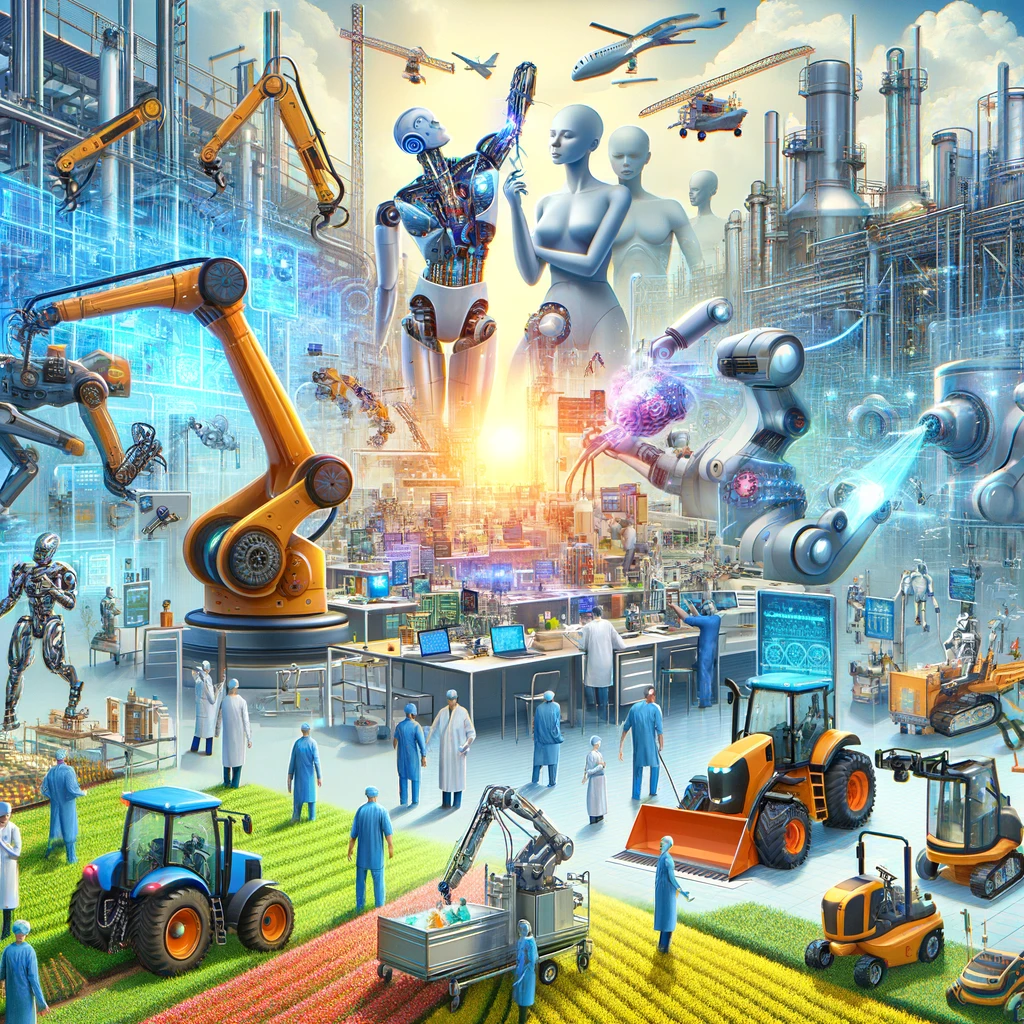
The domains of mechanical technology and robotization address the apex of innovative headway, entwining to reclassify the limits of human potential, proficiency, and imagination. From modern assembling lines to the solace of our homes, the impact of these innovations is inescapable, proclaiming another period of development and cultural change. This article leaves on an excursion through the powerful scene of mechanical technology and computerization, uncovering the subtleties of their turn of events, applications, and the way ahead.
The Advancement of Mechanical technology and Robotization
The excursion starts with a verifiable outline, following the roots from early mechanical machines to the complex simulated intelligence driven robots of today. The advancement is set apart by critical achievements, for example, the presentation of the principal modern robots during the 1960s, which reformed assembling, and the approach of independent vehicles, which are set to rethink transportation.
Current Advances and Patterns
The present mechanical technology and mechanization innovations are described by phenomenal degrees of insight, adaptability, and independence. Key advancements incorporate cooperative robots (cobots) that work close by people, drones for conveyance and reconnaissance, and mechanical cycle robotization (RPA) that computerizes dull assignments in different ventures. Simulated intelligence and AI are at the core of these progressions, empowering robots to gain from encounters and perform complex errands.
Applications Across Ventures
The utilizations of mechanical technology and computerization range across areas, showing their flexibility and extraordinary potential:
Manufacturing: Upgraded efficiency, security, and quality control through mechanized sequential construction systems and quality assessment frameworks.
Healthcare: Mechanical medical procedure, patient consideration robots, and mechanized analytic frameworks are working on tolerant results and functional proficiency.
Agriculture: Independent farm haulers, drones, and mechanical collectors are upgrading crop creation and asset the executives.
Administration Area: From neighborliness to retail, robots are improving client assistance and functional productivity.
Cultural Effect and Moral Contemplations
The boundless reception of mechanical technology and robotization achieves huge cultural ramifications, including labor force removal, protection concerns, and moral problems in artificial intelligence direction. The talk encompassing these advances is progressively zeroing in on guaranteeing evenhanded advantages, tending to the computerized gap, and creating moral rules for simulated intelligence and mechanical technology.
Difficulties and Future Possibilities
Notwithstanding their true capacity, the way ahead for mechanical technology and computerization is loaded down with difficulties. Specialized constraints, significant expenses, and administrative obstacles are only a hint of something larger. Future headways depend on beating these impediments, encouraging public acknowledgment, and guaranteeing that these innovations contribute emphatically to cultural advancement.
The skyline for mechanical technology and robotization is extensive, with possible forward leaps in artificial intelligence, material science, and energy productivity ready to open new applications. The vision of a future where robots and people exist together amicably, each supplementing different’s capacities, is steadily turning into a reality.
In Summary
Investigating the universe of mechanical technology and robotization uncovers a scene rich with valuable open doors and difficulties. As these advances proceed to develop and coordinate into each part of human existence, they vow to introduce another period of productivity, advancement, and joint effort. The excursion ahead is as much about mechanical headway for all intents and purposes about exploring the cultural changes these developments bring. Embracing this future requires a coordinated exertion from technologists, policymakers, and society to outfit the advantages of mechanical technology and robotization while tending to their difficulties head-on.
As computerized reasoning (artificial intelligence) meshes its direction more profound into the structure holding the system together, the moral contemplations encompassing its advancement have become progressively foremost. From algorithmic inclinations to security concerns and then some, the basic to guide simulated intelligence improvement along a moral course is both a moral and viable test for engineers, organizations, and policymakers the same. This article dives into the diverse moral scene of artificial intelligence improvement, featuring key worries and proposing pathways toward dependable simulated intelligence.
The Underpinnings of Moral man-made intelligence
Straightforwardness and Reasonableness
Straightforwardness in computer-based intelligence includes the capacity to comprehend and make sense of how man-made intelligence frameworks simply decide. This is critical for building trust among clients as well as for recognizing and adjusting predispositions inside computer-based intelligence models. Reasonable simulated intelligence looks to demystify simulated intelligence processes, making them open and justifiable to non-specialists.
Reasonableness and Predisposition
Artificial intelligence frameworks are just however fair as the information they may be prepared on. Authentic information can reflect past biases, prompting artificial intelligence frameworks that propagate these inclinations. Tending to reasonableness includes basic assessment of preparing information, nonstop checking for one-sided results, and the execution of restorative measures.
Responsibility and Obligation
Deciding responsibility in simulated intelligence frameworks is perplexing, particularly when these frameworks work independently. Laying out clear rules for responsibility and obligation, especially in situations where man-made intelligence choices might inflict any kind of damage, is fundamental for moral artificial intelligence advancement.
Protection
Computer based intelligence’s capacity to break down immense measures of individual information raises huge protection concerns. Moral computer-based intelligence advancement should focus on information insurance, guaranteeing that artificial intelligence frameworks regard client security and agree with information assurance regulations.
Challenges in Moral simulated intelligence Improvement
Certifiable utilization of moral standards in man-made intelligence advancement faces various difficulties. These incorporate the specialized trouble of planning logical computer-based intelligence, the financial tensions to quickly convey artificial intelligence arrangements, and the worldwide idea of computer-based intelligence advancement, which traverses various lawful and social settings.
Techniques for Moral computer-based intelligence Improvement
Creating moral computer-based intelligence requires a multi-layered approach. This incorporates:
Moral computer-based intelligence Rules: Laying out thorough rules that frame moral standards for man-made intelligence improvement.
Different Advancement Groups: Advancing variety in man-made intelligence improvement groups to decrease predispositions and guarantee a large number of points of view.
Partner Commitment: Including different partners, including clients, ethicists, and social researchers, in the man-made intelligence improvement cycle to recognize likely moral issues.
Administrative Structures: Carrying out administrative systems that command moral guidelines for artificial intelligence advancement and use.
The Job of Partners
The obligation regarding moral computer-based intelligence advancement is divided between different partners:
Designers and Organizations: Should focus on moral contemplations in the plan, advancement, and arrangement of computer-based intelligence frameworks.
Legislatures and Policymakers: Ought to make and implement guidelines that guarantee simulated intelligence advancement complies with moral norms.
End Clients: Play a part in requesting straightforwardness, reasonableness, and responsibility in artificial intelligence frameworks they connect with.
The Way ahead
The way to moral computer-based intelligence improvement is progressing and requires ceaseless exertion from all partners included. By embracing moral standards, taking part in open discourse, and executing powerful administrative structures, we can direct artificial intelligence improvement toward results that are useful and fair for all of society.
InSummary
Moral contemplations in computer-based intelligence advancement is basic to guaranteeing that simulated intelligence innovations benefit mankind while limiting mischief. By sticking to standards of straightforwardness, reasonableness, responsibility, and security, and by connecting all partners in the moral man-made intelligence discourse, we can explore the complex moral scene of simulated intelligence advancement. The eventual fate of man-made intelligence ought to be molded by an aggregate obligation to moral standards, guaranteeing that man-made intelligence fills in as a power for good in the public eye.
It is essential to have an advantage in the fast-paced business environment of today. This is where your hidden weapon, artificial intelligence, or AI, comes into play. Imagine being able to handle everything, from managing your finances to understanding your customers, with the help of a very intelligent assistant. AI can help you outsmart the competition and achieve unprecedented success for your small business, much like granting it superpower status. AI may completely change how you operate your organization, from automating operations to forecasting customer patterns. So fasten your seatbelts and prepare to learn how artificial intelligence can turn your tiny company into a major player!
Understanding AI and Its Benefits for Small Businesses
Okay, so tell me what artificial intelligence is and why it matters. Imagine having a superintelligent assistant who is well-versed in your industry and can guide you toward wiser choices. That’s basically AI! It’s similar to possessing both a relentless worker who completes tedious duties and a crystal ball that can forecast what your customers desire.
Artificial Intelligence focuses on enabling computers to think and learn like people. It can detect patterns and make predictions by analyzing vast amounts of data. This translates to enhanced consumer insights, better products or services, and more informed decision-making across the board for your small business, from marketing to finance. It is like bestowing a superpower upon your company!
Assessing Your Business Needs
You must have a thorough understanding of your industry before you can fully utilize AI. It is comparable to attempting to solve a mystery like a detective. Determine what drives your company, what obstacles you must overcome, and what your clients’ true needs are. This entails speaking with consumers, analyzing your competitors, and delving deeply into your data. You can begin considering how AI can be your hidden weapon to overcome your most difficult challenges and achieve new heights after you have a clear image of your company.
Choosing the Right AI Tools
It’s similar to selecting the ideal superhero for the task while selecting the appropriate AI tool. If a faucet was leaking, you wouldn’t call Superman, would you? For your company, you must thus identify the ideal AI fit. Numerous artificial intelligence tools are available, each possessing unique capabilities. Certain people excel at customer service, while others possess exceptional numerical computation skills. Search for those who are a perfect fit for your company. To assist you win the business game, it’s like assembling a super powerful team!
Artificial intelligence (AI) will completely change education, allowing higher-quality and specific instruction than ever before. Imagine a classroom where teachers have the resources to immediately identify and support challenging kids, or where each student receives courses created specifically to fit their learning style. With AI, this is the new reality. Technology will change the way we teach and learn. Examples include intelligent tutoring systems that give immediate feedback and responsive learning platforms that modify content based on student success. Explore the real-world applications of artificial intelligence in education to see how these developments are influencing how both students and teachers will learn in the future.
Personalised Learning Experiences
No more mispronouncing words in class! AI tutors can identify your favorite approach of learning, acting as personal trainers. Are you feeling stuck on an idea? Exercises that are interactive and intended to motivate a click from you. Even technology has the ability to inspect your work and offer specific feedback on grammar. This goes beyond only addressing information gaps; just think of studying the human figure with digital reality games or studying history with interactive representations! AI personalised learning, transforming it into an exciting journey that ignites your own potential.
Photo by Annushka Ahuja: https://www.pexels.com/photo/a-girl-using-a-tablet-in-an-online-class-8055156/
Intelligent Tutoring Systems
No more feeling confused in class! AI tutors recognize your learning style. Are you having trouble Understanding a concept? It becomes clearer through interactive tasks. Artificial intelligence evaluates your writing and provides personalized feedback. It extends beyond knowledge gaps, allowing you to investigate history with representations or the human body with augmented reality games! AI personalized education, transforming it into an engaging adventure that sparks your unique flame.
Automating administrative tasks
AI tackles tedious tasks like grading & scheduling, freeing teachers. No more late nights spent grading papers! AI becomes your tireless grading sidekick. It streamlines administrative tasks so teachers can focus on students. This frees teachers to create engaging lessons and connect with students. AI empowers teachers to become the superheroes of the classroom. They can inspire students and nurture their potential.
Increasing Student Engagement
Forget boring lectures! AI makes learning interactive and engaging. No more daydreaming in class. AI tutors use simulations and AR to bring lessons to life. It caters to different learning styles with games and quizzes. AI ignites curiosity and makes students active participants. This revolution empowers students to become explorers in the world of knowledge. AI helps students discover the joy of learning on their own.
Photo by Julia M Cameron: https://www.pexels.com/photo/man-in-yellow-crew-neck-t-shirt-using-vr-headset-4144179/
Early Recognition of Learning Disabilities
Learning disabilities can feel like hidden hurdles in education. AI helps spot these difficulties early on, functioning like a watchful guardian. It identifies patterns that might suggest a learning difference. AI enables educators to intervene early and provide targeted assistance. Early intervention is critical in transforming education from a source of stress to one of empowerment. Learning plans are personalized by AI to meet the needs of each individual. This artificial intelligence revolution helps to level the playing field for all students.
Facilitating Language Learning
It might be overwhelming to learn a new language. AI instructors serve as your own language coach, adapting their approach to your specific needs. Are you stuck on grammar? AI makes it enjoyable by incorporating interactive tasks. It evaluates your pronunciation and provides customized comments. AI goes beyond memorizing by immersing you with the language’s culture. Explore Spanish virtual markets or historical simulations! AI personalized learning, transforming it into a cultural exploration adventure. This AI revolution enables you to connect with the world in new ways.
Enhancing Accessibility
AI eliminates hurdles for pupils with disabilities. Textbooks are now audio descriptions, and lectures include real-time captioning. AI adapts learning materials to meet the needs of diverse learners. Math equations can be transformed into haptic or voice-activated gadgets. AI provides everyone with their own personal learning helper. This promotes a sense of belonging and helps students realize their full potential. Artificial intelligence enables a fully inclusive learning environment for all pupils.
Predictive Analytics for Student Success
AI assists you in identifying areas for improvement through data analysis. It is not mind-reading, but rather a successful instrument. AI evaluates learning patterns and performance data. It detects areas where you could be struggling before you do. AI offers resources and exercises to help you get back on track. It customizes suggestions to help you succeed in your studies. This encourages you to be a more proactive student. AI enables you to take control of your learning experience. It converts you from a passive student into an active participant. This artificial intelligence revolution personalizes instruction to ensure your academic success.
Photo by Tima Miroshnichenko: https://www.pexels.com/photo/bearded-man-in-white-dress-shirt-wearing-eyeglasses-sitting-in-front-of-laptop-feeling-pensive-7567426/
Personalized Career Guidance
Feeling lost in your job search? AI serves as your personal career sherpa. It examines your talents, interests, and previous experiences. Do you feel stuck in a rut? AI recommends new career possibilities that match your interests. It assists you in navigating the enormous number of employment opportunities. AI functions as a dedicated professional counselor, recognizing your individual abilities. obtaining a career that ignites your passion is more important than simply obtaining a job. AI enables you to make more educated decisions regarding your career future. It assists you in discovering your hidden abilities and pursuing a rewarding career path. This AI revolution makes the job search a thrilling journey of self-discovery.
Enhancing Teacher Professional Development
Teachers are responsible for a variety of jobs, but AI can help. Grading is handled by AI, giving you more time to prepare new lessons. Teachers can concentrate on discussions and individualized feedback. AI allows instructors to become classroom superheroes. Technology enhances the human touch in education by making learning more enjoyable.
Photo by Ron Lach from Pexels: https://www.pexels.com/photo/professional-drama-professor-looking-at-a-script-7967580/
Creating Smart Content
AI combats writer’s block and becomes your brainstorming partner. It assists with topic research, outline creation, and writing prompt suggestions. Having trouble finishing a paragraph? AI provides alternate wording or statistics to support your argument. It evaluates your writing style and generates new connections. AI unleashes your creative potential, serving as a tireless partner. You prioritize creativity, storytelling, and audience connection. AI allows you to convey your ideas in a more effective way.
Supporting Research and Data Analysis
Research might feel like a data swamp. AI becomes your research collaborator, exploring databases for pertinent facts. Stuck with complicated data? AI processes it at superhuman speed and precision. It allows you to concentrate on research issues and interpreting data. AI unlocked data’s potential, resulting in ground-breaking breakthroughs. This revolution democratizes research and makes it available to everyone. It turns study into a collective exploration of the unknown.
Addressing Equity and Inclusion
AI tackles equity and inclusion challenges in education. It dismantles barriers and personalizes learning for all students. Textbooks can be translated and lectures captioned for better understanding. AI tailors materials to different learning styles and disabilities. It acts as a personal learning champion celebrating your background. AI empowers all students and levels the educational playing field. It fosters a sense of belonging in a truly inclusive classroom.
Enhancing Parental Engagement
AI bridges the gap between parents and educators. No more uncertainty about your child’s schooling! AI keeps you updated with personalised progress reports and real-time updates. Do you find yourself stuck on a learning concept? AI offers comprehensive explanations and resources to assist at home. It encourages parents to be active participants in their children’s education. AI encourages a genuine collaboration between parents and teachers. Clear communication and resources help to build a united front for your child’s success. AI elevates parental involvement from a burden to a pleasurable experience. Parents observe their child’s development and celebrate their accomplishments together.
Future Prospects and Challenges
AI provides amazing educational opportunities, including individualized learning, fascinating lessons, and support for all students. Data bias and a detachment from human interaction are among the challenges. AI should empower rather than replace teachers. It has the potential to personalize education and bridge the gap between students and teachers. Ethical issues are critical for ensuring that AI respects diversity and promotes human connections.
As we negotiate the AI-driven educational landscape, it becomes evident that this technology’s integration is really just getting started. Consider researching AI tools and platforms that can improve your teaching and learning experiences to remain ahead of the curve and guarantee that your educational methods are up to date. Join us in embracing AI’s role in education, and together, we can make learning more effective, inclusive, and engaging for all.
Imagine a world in which medical professionals have access to highly intelligent companions to help them identify treatments for illnesses. Artificial intelligence (AI) has huge promise in the medical field. It is like having an outstanding physician who is unlimited and able to examine far more data than a human could. The Technology know as Artificial intelligence is changing healthcare and sickness prevention through drug development and improved decision-making for medical professionals. However, things aren’t perfect. Maintaining the security of our health information and ensuring that AI treats everyone equally are two difficult concerns. Discover the ways that artificial intelligence is transforming healthcare and expanding the field of medical study.
The Evolution of AI in HealthCare
AI hasn’t always been a medical miracle worker. In the past, paperwork and math calculations were the main uses of computers. Yet they become wiser with time. By examining a patient’s symptoms, artificial intelligence (AI) began assisting physicians in diagnosing conditions in the 1970s. It was similar to having a really intelligent helper!
AI in healthcare continued to advance along with computers. AI was first used by medical professionals to identify trends in patient data, leading to the development of novel therapies and medications. Then the great leap occurred: artificial intelligence began to aid in surgeries! AI-powered robots with extremely sophisticated minds started helping surgeons in the operating room, improving accuracy and safety.
AI is now pervasive in the medical field. It resembles a group of little assistants helping patients feel better by working nonstop. AI is altering the medical landscape by providing clinicians with powerful tools to combat diseases, from personalized treatment plans to the discovery of novel medications. Our progress has been just astounding!
Photo by MART PRODUCTION from Pexels: https://www.pexels.com/photo/technology-computer-health-medical-7089021/
AI-powered Diagnostics
AI is similar to an extremely intelligent physician who can identify issues before they arise! Think of X-rays as detectives in waiting. That’s what hospitals are using AI for. It can detect microscopic details in scans, such as MRIs and X-rays, that even highly skilled medical professionals could overlook. It is far superior to having a second pair of eyes!
AI is also improving physicians’ understanding of diseases. AI can identify trends and understand the functioning of diseases by analyzing vast amounts of patient data. This aids researchers in developing novel medications and therapies. It’s like having a highly intelligent researcher searching for a cure all the time!
Photo by Artem Podrez: https://www.pexels.com/photo/photo-of-woman-looking-through-microscope-5726706/
Personalized Medicine
Imagine being treated by a doctor who is as knowledgeable about your body as a super-smart superhero. AI is enabling individualized medicine, which is centered around this idea! Physicians can now utilize AI to examine your individual body and DNA rather than prescribing the same medication to everyone. It’s like having a personalized treatment plan created just for you!
To determine the best course of action for you, AI can examine your lifestyle, medical history, and DNA. It’s like having a little researcher searching for the ideal medication inside your body. Better outcomes and fewer side effects are the result of this. This is healthcare’s future, and it’s really fantastic!
Photo by Karolina Kaboompics: https://www.pexels.com/photo/person-holding-a-vaccine-4047186/
AI in Survey
AI is also incredibly intelligent when it comes to taking surveys! Imagine answering questions via a survey that can comprehend your responses and even learn from them. That’s what artificial intelligence does! It can significantly increase the usefulness and interest of surveys. AI can ask you more questions in response to what you say, rather than merely selecting responses from a list. It’s similar to speaking with a very intelligent friend in person.
Furthermore, AI is capable of examining every response and identifying trends that people would overlook. It’s comparable to having a data-driven detective with the ability to unravel mysteries. This makes it easier for medical professionals and scientists to comprehend issues like patient attitudes about new medications and the kind of treatment that patients require. The progress AI is making is really amazing, smarter and more beneficial surveys!
Administrative Efficiency
AI is similar to a hospital’s extremely well-organized office manager! Doctors and nurses may spend more time with patients as it handles all the tedious paperwork and number crunching. Just picture appointment-taking robots that can also order supplies and complete insurance forms. AI is achieving that! It’s similar to having an assiduous group of workers who never weary or make mistakes.
AI is also assisting hospitals in making better decisions. With the use of a large amount of data, it can determine how best to use resources like beds and medication. Like having a crystal ball that can see into the future and tell what the hospital needs. Doctors and nurses may concentrate on their work because AI will take care of the tedious tasks.
Photo by Thirdman from Pexels: https://www.pexels.com/photo/man-in-white-long-sleeve-shirt-wearing-face-mask-sitting-on-black-chair-7652346/
Drug Discovery and Development
AI is assisting in the development of incredible new medications, much like a super-smart scientist! It’s like trying to find a needle in a haystack when it comes to finding new drugs, but AI is making it a lot easier. It is capable of analyzing millions of different compounds to identify potential medicinal candidates. It’s similar to having an extremely quick lab assistant that never tires!
Furthermore, AI can forecast a new drug’s potential effectiveness as well as any potential negative effects. It resembles possessing a crystal ball with the ability to glimpse into the future of medicine. As a result, people will start feeling better sooner and we will be able to identify remedies for illnesses much faster. The fact that AI is saving lives is really amazing!
Remote Monitoring and Telemedicine
AI is like a very intelligent nurse keeping an eye on you from a distance! Imagine having a little robot doctor that visits your house every day to monitor your health. AI uses remote monitoring to accomplish that. It tracks your blood pressure, pulse rate, and even your sleep using smartwatches and health trackers, among other amazing devices. It is like owning a personal health assistant!
That’s not all, though. With all that data at its disposal, AI can identify issues before they become too serious. It’s like possessing an extremely powerful crystal ball that can foretell when you might become ill. This implies that medical professionals can intervene and provide assistance even before you experience symptoms. Additionally, having remote monitoring reduces the frequency of hospital visits, which is fantastic for those with busy schedules and those who reside distant from medical professionals. It’s similar to bringing the doctor’s office into your living room!
Photo by Tima Miroshnichenko: https://www.pexels.com/photo/a-doctor-doing-an-online-consultation-8376177/
Ethical and Regulatory Challenges
Although AI in healthcare is really exciting, there are some difficult issues to be resolved. AI can save lives for medical professionals, but we must utilize it carefully. Who is the owner, for instance, of the data that AI needs to learn? And what happens if the AI is wrong? That might be quite the issue!
Fairness is another important consideration. Not just the wealthy should benefit from AI. Robots making decisions that are unjust to particular people is something we do not desire. Not to mention the importance of jobs. Certain jobs may disappear as AI advances. Thus, we must consider the best ways to assist individuals in acquiring new skills and locating employment. Like piecing together a large puzzle with lots of pieces!
Data Privacy and Security
Safeguarding the privacy of your medical records is crucial! For AI to be intelligent, vast amounts of data are required, but those data also contain personal information about you. Think of your private information, including medical data, becoming publicly available online! For this reason, it is crucial to protect the privacy of your medical records. Your information must be safeguarded from hackers and accessible only to the appropriate parties. It’s similar to keeping your health secrets behind a very powerful lock.
However, maintaining secrecy is not the only goal. Furthermore, we must use the data fairly. Artificial intelligence (AI) shouldn’t make things worse for certain people; everyone should have equal access to quality healthcare. Like ensuring that everyone has an equal chance at being healthy Thus, even while AI is incredibly useful, we must exercise caution and ensure that we use it in a way that keeps everyone safe.
Workforce Implications
AI is transforming healthcare and nursing! Doctors can now spend more time with patients rather than on paperwork thanks to AI. Consider having a robot assistant do tedious tasks like drafting reports and setting up appointments. AI is achieving that! It’s similar to having an extremely quick and industrious assistant.
However, documentation is not the only issue. AI is also facilitating medical professionals’ learning. It can identify trends in medical data that people might overlook, which could result in novel findings and improved therapies. It has similarities to having a very intelligent and dedicated instructor who is always willing to help. Like everything else, though, AI may cause some employment to shift or even disappear. Thus, acquiring new knowledge is a crucial ability and keeping yourself current with technologies. It’s similar to picking up a new superpower!
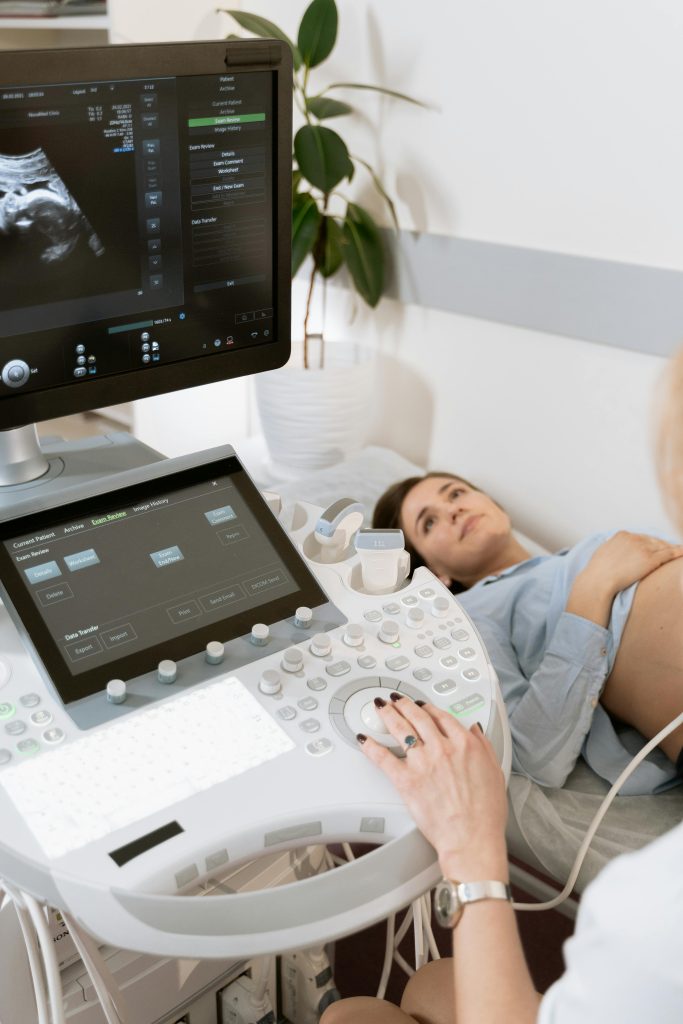
Photo by MART PRODUCTION: https://www.pexels.com/photo/photo-of-ob-gyn-doing-a-test-7088841/
AI in Global Health
Artificial Intelligence is like a superhuman physician providing global healthcare! It can assist those without access to quality healthcare by reaching locations that are inaccessible to actual doctors. Consider employing AI to train medical professionals in distant nations how to perform robotic surgery or to identify disease outbreaks before they become too severe. It’s similar to having a group of really intelligent aides battling disease all around them.
AI is also useful for food and clean water. AI can identify issues and recommend solutions by analyzing large amounts of data. It’s similar to having an extremely intelligent detective who can crack the greatest health secrets in the world. Thus, although AI is benefiting people in wealthy nations, it is also an effective tool for bringing about universal health in the world.
Future Prospects of AI in Healthcare
AI’s potential for the healthcare industry is really exciting! Imagine a scenario in which robot assistants for doctors are even more intelligent than they are. That is our future, according to AI. Hospitals that can anticipate when you could become ill, customized medications, and tiny robots doing surgery are all possibilities. It’s comparable to owning a health crystal ball!
It’s not all about fancy technology, though. AI can also assist us in discovering treatments for illnesses that are currently unimaginable. Like having a very intelligent scientist working around the clock to save lives. AI also allows us to reach a larger population, even in areas with a shortage of doctors. It’s similar to providing healthcare to everyone on the planet!
Naturally, there is still work to be done to come to terms with, such as ensuring that AI treats everyone fairly and protecting our personal data. But the future of healthcare seems really promising if we use AI intelligently!
Photo by RF._.studio: https://www.pexels.com/photo/photo-of-women-at-the-meeting-3810792/
Conclusion
AI has incredible potential to change healthcare! Our health is being improved around the clock by a super-smart staff that works on everything from developing new medications to assisting physicians in making better judgments. But keep in mind that artificial intelligence is merely a tool. To use this knowledge to benefit patients, real doctors and nurses are still required. It’s like having access to a super powerful microscope that allows us to see things we couldn’t see before.
Artificial intelligence has a very interesting future in healthcare! Not too distant from the future: hospitals that anticipate patient illness, customized medications, and surgical robots. However, caution must be exercised when using AI and equal opportunity must be ensured for all. Planning ahead and working diligently will enable us to build AI-enabled medical care delivery in the future that improves global health and saves lives.
Stay up to date on the newest advances in artificial intelligence and healthcare. Subscribe to our newsletter to receive updates and insights into how AI is influencing the future of medicine.
Photo by Anamul Rezwan: https://www.pexels.com/photo/people-stands-near-green-metal-industrial-machine-1087083/
The global labor markets are changing due to automation, which is experiencing a major shift in how we work. Look at a world where AI and robotics handle repetitive tasks, allowing people to focus on strategic and creative responsibilities. While we expect this move to boost productivity and efficiency, it also raises concerns about inequality and job displacement. How can we overcome these challenges and make the most of automation’s promise for a better future?
The historical context of automation
Photo by Tiger Lily: https://www.pexels.com/photo/men-working-in-a-warehouse-4481258/
The Range of Modern Automation
There are many different technologies and applications used in modern automation. Machines may now carry out tasks that were previously limited to people thanks to robotics, artificial intelligence, and machine learning. The manufacturing process is made more precise and efficient by automated assembly lines and robotic arms. Business-client interactions are being changed by AI-powered chatbots and automated customer service solutions.
It is particularly important when artificial intelligence is used in data analysis and decision-making processes. Massive amounts of data are looked at by AI systems at previously unheard-of rates, and the patterns and insights they uncover drive innovation and strategic planning. In the finance industry, artificial intelligence (AI) is used for fraud detection, algorithmic trading, and predictive analytics, which is changing the industry and its responsibilities.
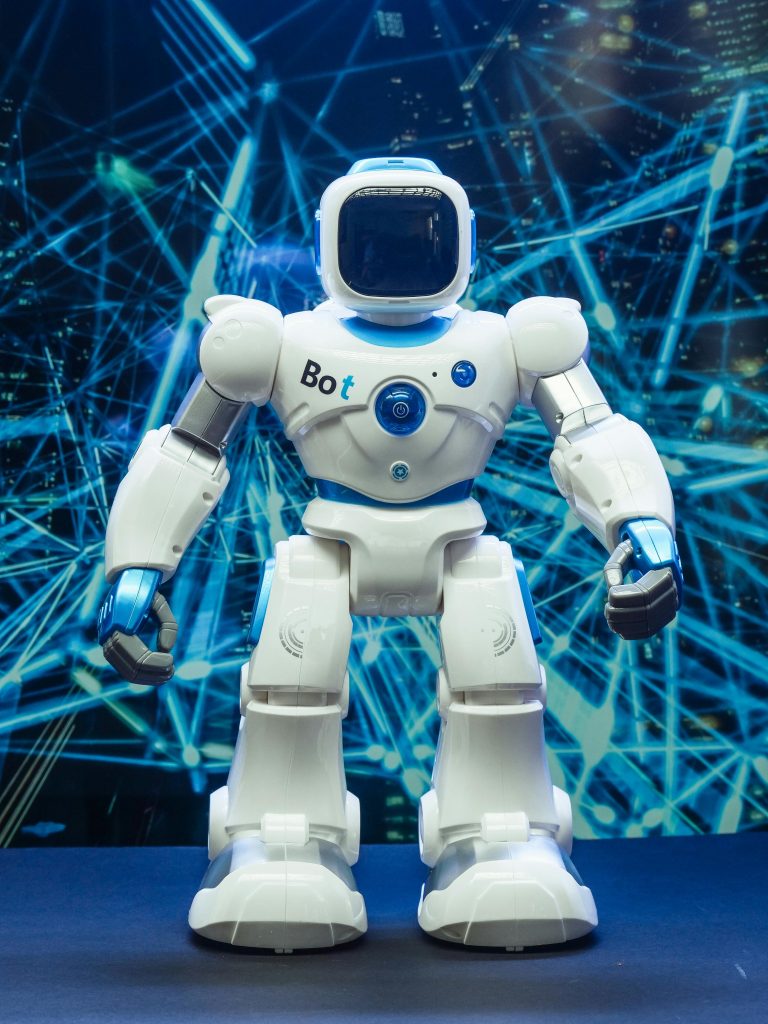
Photo by Kindel Media: https://www.pexels.com/photo/full-shot-of-robot-toy-8566474/
Automation in Manufacturing
Manufacturing has always been at the forefront of automation, which has major effects on labour markets. Robotics and automated machinery have changed manufacturing processes, lowering costs and increasing productivity while also replacing many manual and repetitive jobs. The auto industry is an excellent instance of this shift, with assembly lines—which were formerly manned by human workers—being controlled by robotic arms that execute tasks with rarely seen precision and speed. This shift has resulted in the creation of new jobs in robot programming and maintenance while also avoiding traditional industrial jobs.
Automation’s power is demonstrated by advanced manufacturing technologies like Internet of Things (IoT) and 3D printing. Traditional manufacturing requires more effort, while 3D printing allows for the quick design and manufacture of complex objects. By allowing real-time production monitoring and optimization, IoT connects machines and systems, boosting efficiency. However, it lessens the need for human intervention as well.
Automation in Services
The service sector, which includes industries like banking, healthcare, and retail, is likewise greatly affected by automation. By doing away with the need for cashiers and stock clerks, self-checkout kiosks and automated inventory management systems improve retail operations.
The healthcare sector is also greatly impacted by automation. AI-driven diagnostic systems correctly assess medical data and pictures, assisting physicians in the identification and management of illnesses. In order to increase accuracy and reduce recovery periods for patients, robots are used during surgeries. The outcomes of healthcare are improved by these advancements, but they also call for the learning of new skills and the capacity to adapt to changing roles.
Everything in banking has changed as a result of automation, including complex trading processes and customer support. While complicated algorithms do high-frequency trading and make snap judgments based on huge datasets, chatbots driven by AI handle regular customer inquiries. As a result of these developments, the demand for data scientists and AI specialists is rising in the financial industry, while traditional positions are becoming less relevant.
Photo by MART PRODUCTION: https://www.pexels.com/photo/photo-of-ob-gyn-doing-a-test-7088841/
Automation and the gig economy
Automation interacts with the gig economy, which is characterized by freelance work and short-term contracts, in a number of complex ways. Automated job matching is used by platforms such as TaskRabbit, Uber, and Lyft. Still, the gig economy shows how unstable employment is in an automated environment.
While automation increases productivity and provides more flexible work arrangements in the gig economy, it also results in job insecurity and lower worker benefits. The income of gig workers may be unstable, and they might not have full access to benefits like health insurance and retirement programs. The future of employment and the need for regulation to protect gig workers in a less manual economy are major concerns raised by this development.
Economic implications of automation
The distribution of income, economic growth, and productivity are all greatly affected by automation. Positively, automation boosts economic growth, creates new industries, and generates wealth by allowing businesses to produce more with less.
The benefits of automation are not shared equally, though. The demand for low-skilled labor falls as machines take over routine tasks, which causes job losses and pay stagnation in some labor markets. On the other hand, highly skilled workers who design, oversee, and maintain automated systems are in greater demand and are paid more. There’s a chance that this polarization will make social tensions and wealth imbalance worse.
The future of work
The nature of labor is certain to change; jobs related to routine and repetitive tasks are most at risk of automation, while positions involving creativity, critical thinking, and human connection are less likely to be replaced by robots. As a result, in order to survive in an automated economy, the future worker must adjust and acquire new skills and abilities. The future of labor in an automated society is a topic of much debate and guessing. Some analysts predict that automation will result in a net loss of jobs as robots replace humans in a variety of sectors.
Education and Skill Training
In order to prepare workers for a world that is becoming more automatic, education and skill training are essential. Traditional education systems, which often point out memorizing and repetition, may not be enough. Instead, there is a growing demand for education that promotes critical thinking, problem solving, and flexibility. Lifelong learning will become even more important as workers must constantly update their skills to stay up-to-date with recent advances in technology. Businesses, governments, and educational institutions must collaborate to provide affordable, easily accessible training programs that help people transition to new roles in an automated economy.
Ethical and Social Issues
There are plenty of social and moral problems raised by the growth of automation. There are worries about loss of jobs and rising unemployment as machines take on more tasks. To solve these problems, policymakers and business leaders need to come up with plans for a seamless shift for the impacted staff.
Adopting legislation that provides social safety nets, training programs, and unemployment insurance to those who have been affected by technology is one way to help. The moral implications of automation and AI, including problems with privacy, security, and bias, must also be addressed. Making sure automated systems are open, equal, and accountable is necessary to win over the public’s trust and acceptance.
Global Perspectives on Automation
Depending on factors including government policy, sector structure, and economic development, the effects of automation on labor markets change depending on the region and nation. In developed countries, automation changes high-tech industries and boosts production, but it also offers problems for those with low skill levels.
In developing countries, automation brings both advantages and disadvantages. On the one hand, automation helps developing countries catch up to more industrialized nations by boosting economic growth and productivity. In contrast, rapid automation adoption carries the risk of challenging established companies and creating a large-scale loss of jobs, particularly in labor-intensive industries.
Case Studies of Automation in Various Countries
Analyzing case studies from different nations helps shed light on various implications of automation. For instance, the automotive sector in Germany is leading the way in the adoption of robotics and automation, which boosts competitiveness and productivity but calls for skilled workers to oversee and maintain new technology.
In contrast, nations like China and India have new challenges and opportunities. Automation is changing industries in India, including manufacturing and IT, but the nation still has difficulties in creating enough jobs to support its expanding population. Although China’s strong drive toward automation, especially in the industrial sector, aims to move the nation up the value chain, it also creates questions about loss of jobs and the future of the labor market.
Policy responses to automation
In order to support the shift to an automated economy, governments are essential. While ensuring that the benefits of automation are split up fairly, effective policy responses can help reduce some of its negative effects. Possible steps for policy include:
Investing in Education and Training: granting workers access to programs for education and skill development that will help them become ready for their future employment.
Supporting Displaced Workers: supplying workers affected by automation with job training, unemployment benefits, and other forms of support.
Boosting Inclusive Growth: establishing laws to guarantee that society as a whole shares in the advantages of automation, thereby reducing inequality in earnings and strengthening unity among people.
Encouraging Innovation: establishing conditions that encourage creativity and the development of new sectors of the economy, which opens up new job opportunities.
Regulating AI and automation: To ensure that AI and automation are used morally and openly, this calls for the creation of moral guidelines and norms.
Photo by fauxels: https://www.pexels.com/photo/high-angle-shot-of-group-of-professionals-3183172/
Business Strategies for navigating automation
The landscape of business has shifted due to automation, and this requires adaptability. This means coming up with new strategies for taking advantage of automation to obtain an advantage over the competition, investing in new technology, and changing how things work within companies. Important factors for business include:
Reskilling and upskilling employees: This means making training program investments to help staff members pick up new skills and adjust to shifting roles.
Embracing innovation means always looking into and using new technologies to boost productivity and drive expansion.
Fostering an Adaptable Culture: creating an environment at work that values the ability to adapt, ongoing education, and creativity.
Stakeholder collaboration: To address the promise and difficulties of automation, collaboration with governmental bodies, academic institutions, and other interested parties is required.
Ensuring Ethical Technology Use: Ensuring the ethical and transparent use of automation and artificial intelligence through the establishment of ethical standards and policies.
The human element in an automated world:
In many areas of the workplace, the human element remains important, even with major improvements in technology. It is less common for jobs requiring sensitive problem-solving and creativity to be fully automated. Moreover, human judgment and decision-making play an important part in automated system management and supervision.
Human roles in the workplace have an opportunity to be changed as automation changes labor markets. People can undertake more fulfilling and meaningful work that makes use of uniquely human qualities instead of concentrating on regular and unimportant duties. This change calls for business and social change that prioritizes creativity, teamwork, and lifelong learning.
Conclusion
Around the world, automation is changing the nature of work and presenting both opportunities and challenges. It increases economic growth and productivity but also creates questions about job loss, income inequality, and the need for new skills. Governments, corporations, and educational institutions must collaborate to ensure that everyone gains from automation.
Going forward, it’s important to strike a balance between fairness, morality, and technical advancement. With automation, we can use innovation and fairness to build an open and lifelong learning workplace for the future.
Computer science, statistics, and data science are all combined in machine learning. Thanks to more data and better computers, it has grown fast since the middle of the 20th century. Its models—supervised, unsupervised, and reinforcement learning—uses applications throughout the fields of finance, healthcare, and technology. These models are updated and improved on a regular basis. Machine learning continues to be a powerful tool for innovation and problem-solving in the digital age, even in the face of challenges like unfair algorithms and data privacy.
Supervised Learning
Supervised learning is a kind of artificial intelligence (AI) where machines learn from labeled examples to make accurate predictions. it will be widely used to improve many aspects of life, including email services, voice assistants (like Siri and Alexa), finance, healthcare, education, and language translation. In healthcare, it helps doctors diagnose diseases by analyzing medical images. In self-driving cars, it recognizes traffic signs and pedestrians to ensure safe navigation.
Unsupervised Learning
In unsupervised learning, AI learns from data without labels, finding patterns and relationships. It helps understand and organize data. Businesses can use it to group customers by behavior to improve marketing. Banks detect unusual transactions for fraud prevention. Streaming services recommend movies and music based on your preferences. AI also analyzes text and images to make searching and organizing easier. Researchers use it to sort large data sets like academic papers. Unsupervised learning helps understand complex data and enhances technology’s impact and value.
Reinforcement Learning
Reinforcement learning is a branch of artificial intelligence (AI) in which robots learn by doing various tasks and seeing the results. This method makes life better in a lot of ways. For example, robots use it to learn how to move through obstacles and pick up objects. It is used by self-driving cars to make safe driving decisions and to defeat opponents in video games. Furthermore, businesses like Netflix use it to make better suggestions and the healthcare industry uses it to streamline treatments. Robots learn from their experiences through reinforcement learning, which enables them to become smarter and more useful in our everyday lives.
Data Preprocessing
Preparing unprocessed data for analysis is known as data preprocessing, and it is an important step in artificial intelligence (AI). The usefulness and dependability of AI systems depend on this procedure. Errors, duplication, and missing values are found and fixed during data preprocessing to ensure data accuracy. Meanwhile, the data is formatted into a form that AI models can comprehend, like text to number conversion or scaling of values to a common scale. Accurate and clear predictions are produced by AI models with greater success and clarity when data is preprocessed properly. In conclusion, data preparation is essential to transforming unprocessed data into valuable information that artificial intelligence (AI) systems may use to make wise decisions.
Photo by Anna Shvets from Pexels: https://www.pexels.com/photo/business-partners-working-on-schemes-and-charts-on-papers-5324972/
Data Cleaning
When handling data, especially for important activities, data cleaning is an essential step. This step includes fixing or erasing wrong, corrupted, or missing data from a dataset. Data cleaning fixes errors, adds missing values, and removes all duplicates to make sure the data is accurate and trustworthy. Since clean, high-quality data enables better decision-making, AI systems and other technologies depend on it. Any study or predictions based on the data may be incorrect or misleading if the data is not properly cleaned. To sum up, data cleaning is a key component of any data project since it turns unorganized data into accurate and useful knowledge.
Feature Engineering
Feature engineering is an important part of artificial intelligence (AI) that generates or adjusts features that improve model performance. It is commonly employed to increase the accuracy and intelligence of AI systems. Data scientists identify the most important data during this process and structure it for AI algorithms. This may require combining various data points, increasing the data scale, or adding additional variables. AI systems may recognize patterns more clearly and produce predictions that are more accurate by carefully crafting these qualities. Because it directly affects AI applications’ performance and helps them provide better results and insights, feature engineering is essential.
Data Splitting
In order to ensure that models are properly trained and examined, data splitting is an essential step in machine learning. A training set and a testing set are created by splitting a dataset into these two sections. While the testing set is used for measuring the model’s performance on fresh, untested data, the training set serves as the model’s instruction set. Scientists studying data science are able to understand how easily the model adapts to actual data because to this division. When a model performs well on training data but poorly on real-world data, it is known as overfitting. This can be avoided with enough data separation. Creating dependable and durable AI models that calls for finishing this important phase.
Algorithm Selection
When building AI systems, selecting the right algorithm is important. exact predictions and choices are assured. various algorithms are needed for various tasks, such as trend prediction, image recognition, and language processing. Which option to use depends on the kind of data and the particular issue that has to be handled. While a bad decision can produce unforeseen effects, a wise one increases the usefulness and speed of AI systems. Data scientists test different algorithms to determine which performs best, making sure that the AI system functions properly and achieves its objectives.
Linear Regression
In machine learning and research, linear regression is a straightforward but effective method for predicting values. Because of its effectiveness and ease of use of use, it continues to be popular. Finding the best-fit line through a collection of data points is how linear regression determines the relationship between two variables. For example, based on height, it can figure out an individual’s weight. We can learn how changes in a single element effect another and generate wise recommendations by looking at this linear relationship. Because it promotes data interpretation and exact prediction-making, linear regression is useful in a wide range of industries, including finance, health, and the social sciences.
Decision Trees
In machine learning, decision trees are a well-liked and simple-to-use technique for prediction. They function similarly to a flowchart, with a condition or question at the center and branches out according to the responses. Until a conclusion is reached, each branch raises fresh questions or choices. To diagnose a patient, for instance, a physician might use a decision tree, which asks about the patient’s symptoms and recommends the most likely diagnosis based on the patient’s responses. Decision trees are flexible for a variety of applications since they can handle both categories and numbers. They are frequently used to support the making of acceptable and well-informed decisions in industries including marketing, finance, and healthcare.
Support Vector Machines (SVM)
Support vector machines, or SVMs, are powerful machine learning techniques that may be applied to both classification and regression problems. They are popular because of their ability to identify patterns in data. SVMs classify new data points more correctly by recognizing the best border between various classes in the data. SVMs, for example, have the ability of classifying emails as spam or not. When there are so many features in the data and it is difficult to distinguish between the classes, they are very helpful. SVMs are used in many different kinds of domains, including text classification, picture recognition, and computer science, because of their high accuracy and ability to manage difficult data sets.
Neural Networks
In artificial intelligence (AI), neural networks operate similarly to the human brain they are important factor. Being able to learn and produce exact predictions is why they are so commonly used. Data-processing linked nodes, or “neurons,” consist of the layers that make up neural networks. As they get new information, they respond by changing the connections between neurons. Neural networks, for example, can understand speech, recognize objects in pictures, and forecast trends. They can manage big, difficult datasets and get better with time as they process more information, which makes them strong. When it comes to solving difficult issues and providing smart predictions, neural networks are essential in industries like technology, healthcare, and finance.
Ensemble Methods
By mixing many models, ensemble methods are successful machine learning techniques that increase prediction accuracy. Because they can produce better results than a single model alone, they are very popular. Ensemble approaches use multiple models and combine their predictions, as compared to depending just on one. This improves productivity and reduces mistakes. For example, combining multiple models can result in more accurate weather forecasts. Because they produce accurate and timely answers, ensemble methods are useful in a variety of industries, including technology, healthcare, and finance. They use many models’ strengths to increase the accuracy of difficult predictions.
Photo by Vanessa Loring: https://www.pexels.com/photo/group-of-students-making-a-science-project-7868885/
Model Training
In machine learning, training a model is a key step in which an algorithm gains knowledge from data. For AI systems to be created with success, this approach is essential. The algorithm learns how to build predictions or judgments by using a dataset during training. It changes its parameters in order to increase accuracy and decrease errors. The model is trained using input data, and it is able to learn through examining its predictions to the real results. Accurate calculations and high-quality data are necessary for successful model training. Because they have a big influence, qualified models’ predictions and judgments have significance in industries including technology, healthcare, and finance.
Loss Function
A basic concept in machine learning that helps in model development and improvement is the loss function. It measures how well the model’s predictions match the actual results. In order to minimize this loss and improve accuracy, the model changes its settings during training. The loss function, for example, represents the difference between expected and actual prices in a model that forecasts home prices. Better precision can be seen by a lesser loss. Loss functions direct the process of learning, assisting models in making more precise predictions and choices in a range of industries, including technology, finance, and healthcare.
Optimization
Optimization is a key technique in machine learning used to improve a model’s functionality. It’s important to have precise and efficient AI systems. To lower errors and improve predictions, the model’s settings are changed all through optimization. The model gets help in learning from data quickly by this method, which employs algorithms to determine the most suitable values for various settings. By improving its decision-making guidelines, optimization, for example, helps a self-driving car in learning how to navigate safely. We can improve accuracy and efficiency by improving models, which will increase the dependability and use of AI applications in industries like technology, banking, and healthcare.
Hyperparameter Tuning
Creating AI systems that work requires precise hyperparameter tuning. The process involves changing the parameters that govern a model’s learning, such as the number of layers in a neural network or its learning rate. We examine several combinations of these hyperparameters in order to determine which is best for precise forecasts. For example, a model’s capacity to identify spoken words can be greatly improved by changing hyperparameters. AI models can be made stronger and more reliable for a range of activities and applications by carefully editing these settings.
Model Evaluation
In machine learning, appraisal of models is essential to ensuring accurate and dependable AI systems. In order to better understand the model’s performance on new data, we test it on a dataset that it has never seen before. For measuring how well the model predicts, we employ important performance metrics like F1 score, recall, accuracy, and precision. Models will be evaluated to help find errors and make sure they are suitable for practical application. By carefully examining models, we can improve decision-making in sectors such as technology, healthcare, and finance and have confidence in their forecasts.
Accuracy
One important machine learning statistic that illustrates how well a model makes accurate predictions is accuracy. The percentage of accurate forecasts among all forecasts is used to compute it. A high accuracy level indicates the model’s dependability and efficacy. In the context of medical diagnosis models, high accuracy denotes the majority of patient condition predictions being accurate. For tasks that require exact predictions, accuracy is essential. In industries like technology, finance, and healthcare, we can make sure that AI systems deliver dependable and worthwhile outcomes by emphasizing accuracy.
Precision, Recall, and F1-Score
In machine learning, precision, recall, and F1-score are important metrics that are used to assess the performance of AI models, particularly in classification tasks. The F1-score balances precision and recall, which measure how well the model detects all relevant cases and how accurate the positive predictions are. When taken as a whole, these metrics provide a comprehensive understanding of a model’s success, providing the dependability and value of AI systems in industries such as technology, healthcare, and finance.
Confusion Matrix
A confusion matrix is a table used in machine learning that assesses the performance of categorization algorithms by comparing actual and predicted values. True positives, or correctly anticipated positives, false positives, or mistakenly projected positives, false negatives, or incorrectly predicted negatives, and true negatives make up its four components. This matrix is essential for enhancing dependability and accuracy in industries including technology, banking, and healthcare. It offers insights into the model’s strengths and shortcomings and assists in locating areas where it is making mistakes.
ROC and AUC
The AUC (Area Under the Curve) and ROC (Receiver Operating Characteristic) curves are two machine learning methods for testing categorization models. The ROC curve, which plots the true positive rate versus the false positive rate at various boundary values, shows the trade-off between the two variables. Overall performance is measured by the area under the ROC curve (AUC); a higher AUC indicates a superior model. When ROC and AUC are combined, they offer insights into a model’s accuracy and ability to distinguish between positive and negative examples, which helps in the selection of the best model for sectors including technology, healthcare, and finance.
Photo by Andrea Piacquadio: https://www.pexels.com/photo/elderly-white-hair-worker-using-machine-3846559/
Model Deployment
Enabling a machine learning model to be practical in real-world situations is known as model deployment. In order to provide real-time data handling and precise prediction, it involves setting up the model in an operational context. Physical configuration, performance tracking, and model updates as required are all included in this. In fields including technology, healthcare, and finance, model deployment, when done correctly, transforms AI research into a powerful instrument that improves decision-making and automates tasks.
Model Serialization
To make a machine learning model easily reused, shareable, and stored, it must first undergo a procedure called model serialization. In order to use models in practical applications quickly and consistently, this is crucial. Scalable and efficient AI solutions can be achieved by readily integrating serialized models into various systems. The application of AI in sectors such as technology, banking, and healthcare becomes quicker by this method.
API Development
The process of developing interfaces that enable software systems to communicate with one another is known as API development. This is essential for incorporating payment methods and social media into apps. By reusing components, well-designed APIs allow developers to construct apps more quickly while preserving top speed, security, and ease of use. APIs facilitate smooth system connection, which increases efficiency and innovation in sectors including technology, healthcare, and finance.
Photo by Meruyert Gonullu from Pexels: https://www.pexels.com/photo/crop-unrecognizable-person-working-on-laptop-6589064/
Monitoring and Maintenance
Software systems and machine learning models must be regularly maintained and monitored in order to function properly. While maintenance means keeping the system up to date and making improvements over time, monitoring means regularly reviewing performance and spotting problems. In sectors including technology, healthcare, and finance, they work together to assure that AI models and software continue to function efficiently, respond to new circumstances, and produce dependable results.
Case Study: Predicting Customer Churn
Data Collection and Preprocessing
In order to create successful machine learning models, preprocessing and data collecting are necessary tasks. The process of collecting data involves gathering relevant data from many sources. Through mistake correction, normalization, and missing value fixes, preprocessing cleans and prepares this data. When combined, these actions ensure machine learning models receive high-quality data, which improves performance and yields more accurate predictions in sectors such as finance, healthcare, and technology.
Algorithm Selection and Training
Selecting and training algorithms are essential phases in creating machine learning models. The data and the intended result must be taken into account when selecting the right algorithm. Feeding data to the algorithm during training enables it to recognize trends and generate precise predictions. In order to successfully apply AI in sectors like technology, finance, and healthcare, these steps are needed to ensures the model is fit for the job and yields dependable results.
Evaluation and Deployment
For machine learning models to be effective, evaluation and deployment must be essential processes. To assess the model’s correctness and pinpoint areas for development, evaluation uses metrics like precision and recall. After the model is deployed, it must be integrated with other systems, be used in a real-world scenario to anticipate fresh data, and its performance must be tracked. In combination, these measures guarantee the dependability and practicality of AI models in sectors such as technology, finance, and healthcare.
Challenges and Future Directions
Managing huge amounts of data, protecting data privacy, and creating models that can be understood are some of the difficulties that machine learning must overcome. Additionally, there’s a possibility of bias, where models may favor one group over another, and it can be challenging to maintain model accuracy when new data becomes available.
In the future, researchers hope to enhance data management, safeguard it, and simplify model judgments. Reducing bias and maintaining fair and accurate models are other priorities.
In midst of these challenges, machine learning has a bright future ahead of it, as continued developments increase the accuracy of AI in industries like technology, finance, and healthcare.
Are ready to find out more? Join our AI community and take a look at our advanced lessons as we help to develop the technology of the future!
In an age when time is our most valuable asset, AI helpers are changing the way we work and live. These digital assistants, backed by advanced AI, are increasing efficiency across a variety of industries by managing calendars, automating chores, and providing personalized support. Explore the evolution of AI assistants, their impact on productivity, and the promising future they hold.
Early Beginnings
The path of AI assistants began in the mid-20th century, but it wasn’t until the 21st century that we saw versions similar to today’s AI helpers. Microsoft’s Clippy, an animated paperclip released in 1996, was one of the earliest attempts to include a digital assistant into everyday applications. Despite its limited powers and much criticized intrusiveness, Clippy set the framework for future advancements. Siri, released in 2011, was a huge step forward since it used natural language processing (NLP) to interpret and answer to user inquiries. Siri’s capacity to make reminders, send texts, and answer queries exemplified AI’s promise for increasing personal efficiency.
Technological Advancements
Machine learning, natural language processing, and neural networks have advanced AI assistants from basic command-followers to sophisticated intelligent agents. Deep learning models, which mimic the human brain’s information processing, have enhanced AI’s ability to understand and generate human-like replies. Companies such as Google, Amazon, and Microsoft have made tremendous advances in AI research thanks to large-scale datasets and greater computer capacity. These developments enable AI assistants to execute complicated interactions and decisions, going beyond fundamental functions.
Modern Artificial Intelligence Assistants
Today, artificial intelligence assistants such as Amazon’s Alexa, Google Assistant, and Apple’s Siri are indispensable in our daily lives. These assistants do anything from create reminders and send messages to controlling smart home gadgets and making personalized recommendations. Amazon’s Alexa, which debuted in 2014, rose to prominence thanks to its connection with the Echo, a smart speaker that controls home automation systems, plays music, and delivers on-demand information. Google Assistant, which was released in 2016, takes advantage of Google’s massive knowledge graph and search capabilities, making it one of the most knowledgable and contextually aware AI assistants accessible. These current AI helpers are always evolving, including new features and integrations that improve their capabilities.
Photo by Pavel Danilyuk from Pexels: https://www.pexels.com/photo/a-scientist-testing-a-device-8439172/
Time Management.
AI assistants are particularly good at assisting users with time management. They plan meetings, issue reminders, and send real-time notifications to ensure that essential activities are not forgotten. AI helpers free up time for more important activities by performing administrative tasks. Google Assistant works with Google Calendar to automatically arrange meetings based on availability, provide reminders, and recommend best meeting times.
Task Automation
Automation is one of the most important benefits of AI assistants. They automate repetitive processes like data entry, email sorting, and routine responses, saving time and minimizing human mistake. AI helpers organize emails into folders based on their content, highlight key communications, and archive less important ones. Businesses utilize AI assistants to automate customer support inquiries, freeing up human agents to handle more complex issues.
Personalized assistance
Machine learning algorithms are used by AI assistants to learn user preferences and behaviors and then provide tailored recommendations and reminders. They indicate the optimal times for concentrated work based on previous behavior and track daily activities, providing individualized exercise and meal regimens. This level of personalization enables users to make more informed decisions that are in line with their productivity and wellness objectives.
Photo by Karolina Kaboompics from Pexels: https://www.pexels.com/photo/crop-anonymous-person-calculating-profit-on-smartphone-calculator-near-banknotes-4386321/
Help with Multitasking
AI assistants allow consumers to multitask more effectively by processing several demands at the same time. They listen to music while setting a timer, or they dictate a message while looking for information. This power enables users to achieve more in less time, both personally and professionally.
Impact on workplace productivity
Simplifying communication
AI assistants improve professional communication by organizing meetings, giving reminders, and transcribing meetings in real time. This simplification shortens coordination time and boosts overall team efficiency. AI assistants work with systems such as Microsoft Teams and Slack to automate meeting scheduling and give real-time transcription.
Photo by MART PRODUCTION from Pexels: https://www.pexels.com/photo/a-group-of-people-planning-while-looking-at-the-laptop-7550298/
Improving collaboration
AI assistants make cooperation easier by integrating with project management and communication systems. They monitor project progress, allocate tasks, and ensure deadlines are fulfilled, resulting in a cohesive and effective workplace. AI assistants deliver real-time updates and insights, allowing teams to make better decisions and optimize workflows.
Data Management and Analysis
AI assistants manage and analyze data, sorting through vast amounts of information, recognizing trends, and producing reports. This feature enables staff to make data-driven decisions more quickly, boosting productivity and strategic planning. AI assistants offer real-time analytics and monitoring, track key performance indicators, and automate data entry and validation.
Customer service
In customer service, AI assistants manage regular inquiries, provide immediate responses, and address issues without the need for human participation. This efficiency increases client satisfaction while freeing up human agents for more difficult jobs. AI-powered chatbots respond to frequent customer requests, evaluate user data, and make personalized recommendations.
Key Technologies that Drive AI Assistants
Natural Language Processing (NLP)
NLP allows AI assistants to comprehend and respond to human language. Advances in natural language processing (NLP) have increased the accuracy and intuitiveness of AI-generated responses, making interactions more natural. AI assistants manage complex queries, hold meaningful conversations, and provide extensive explanations of complex topics.
Machine Learning
AI helpers can learn and improve over time thanks to machine learning techniques. They use constant feedback to adapt to user preferences, foresee needs, and maximize performance. Machine learning allows AI assistants to make tailored recommendations, increase accuracy, and optimize performance.
Speech Recognition.
Speech recognition technology allows AI assistants to comprehend spoken orders and reply appropriately. This technology has advanced dramatically, enabling more precise and responsive speech interactions. AI assistants can communicate in a variety of accents and dialects, making them accessible to a global audience.
Computer Vision
Some artificial intelligence assistants include computer vision capabilities, which allow them to understand visual information. This technology is useful in security applications since AI can recognize faces and detect irregularities. Computer vision improves functionality by providing visual cues and direction.
AI Assistants in Action: Healthcare Case Studies.
AI assistants in healthcare monitor patient data, plan appointments, and offer virtual consultations. They evaluate patient data to detect trends and aid in diagnosis and therapy planning. AI helpers improve patient care by making tailored health suggestions and reducing administrative procedures.
Photo by Anna Shvets: https://www.pexels.com/photo/smiling-ethnic-lady-visiting-dentist-in-modern-clinic-3845548/
Education
AI helpers are transforming education by delivering tailored tutoring and support. They assist students with assignments, explain hard topics, and monitor academic progress. AI assistants improve classroom instruction, encourage lifelong learning, and promote professional development.
Finance
AI assistants aid with investment management, financial guidance, and the detection of fraudulent activity. They track industry trends, provide real-time data, and improve customer service. AI helpers detect fraud by analysing transaction data and reporting suspicious patterns.
Smart homes
Smart homes rely heavily on AI assistants to handle lighting, heating, and security systems. They make individualized recommendations, increase convenience, and improve energy efficiency. AI assistants improve the quality of life in smart homes.
AI Assistants’ Future: Continued Integration.
The future of AI assistants is dependent on their continuing integration with numerous devices and platforms. AI assistants will become more integrated into our daily lives, interacting with smartphones, vehicles, and household gadgets. This integration will give constant help while also improving consumers’ overall well-being.
Improved personalization
As AI assistants advance in sophistication, their capacity to tailor interactions will improve. Based on a better understanding of user behavior, they will make more accurate recommendations and offer preemptive support. Healthcare and education will benefit from enhanced personalization, with individualized health recommendations and learning experiences.
Ethical Concerns
Ethical considerations will become more significant as AI helpers grow more common. Data privacy, security, and potential biases in AI systems are all concerns that must be addressed. Companies must put in place solid data protection measures, assure transparency, and develop rules for the responsible use of AI assistants.
Advanced Capabilities
Future AI assistants will have more complex features, such as emotional intelligence and advanced problem-solving ability. These developments will allow them to offer comprehensive assistance in both personal and business situations. AI assistants will use developing technology to improve their performance and boost productivity and innovation.
As AI technology advances, the potential for AI helpers to improve our lives grows rapidly. By embracing this technology and tackling the accompanying moral issues, we can take advantage of AI’s power to create a more efficient, productive, and joyful future.
Manage Consent
To provide the best experiences, we use technologies like cookies to store and/or access device information. Consenting to these technologies will allow us to process data such as browsing behavior or unique IDs on this site. Not consenting or withdrawing consent, may adversely affect certain features and functions.
Functional
Always active
The technical storage or access is strictly necessary for the legitimate purpose of enabling the use of a specific service explicitly requested by the subscriber or user, or for the sole purpose of carrying out the transmission of a communication over an electronic communications network.
Preferences
The technical storage or access is necessary for the legitimate purpose of storing preferences that are not requested by the subscriber or user.
Statistics
The technical storage or access that is used exclusively for statistical purposes.The technical storage or access that is used exclusively for anonymous statistical purposes. Without a subpoena, voluntary compliance on the part of your Internet Service Provider, or additional records from a third party, information stored or retrieved for this purpose alone cannot usually be used to identify you.
Marketing
The technical storage or access is required to create user profiles to send advertising, or to track the user on a website or across several websites for similar marketing purposes.